Definitional + how-to · Updated as CPW changes
Look up the answer. We'll explain the question.
Guides written by a 138-year working ranch on GMU 59. Draws, licenses, landowner vouchers, gear by weapon class, and what the words on the CPW website actually mean.
Four areas
What kind of question is it?
Draws & licenses
How to acquire a Colorado tag — the draw, the points, the vouchers, the timing.
How the Colorado elk draw works
End-to-end walkthrough: when to apply, what preference points do, how the draw runs, and how to read the results. Written for non-residents looking at GMU 59 and adjacent units.
~2,200 words
Colorado preference points, explained
How CPW points accumulate, when they reset, and how many you need to draw GMU 59 elk by season. Includes an interactive lookup widget for current cutoffs.
~1,800 words
How to draw a Colorado elk tag
The whole process in seven steps — CPW account, points, hunt code, the April deadline, June results, and exactly what to do if you don't draw. The procedural walkthrough.
~1,400 words
Colorado leftover elk tags
Didn't draw? Four paths to a tag after the primary draw — the leftover list, the reissue list, remaining OTC, and landowner vouchers. When each opens and how to grab one.
~1,400 words
How to read a Colorado hunt code
Codes like EM059O1R, decoded — species, sex, unit, season, method. The five parts so you apply for the exact hunt you want and never draw the wrong tag.
~1,200 words
Colorado rifle elk seasons
The four rifle seasons compared — 1st, 2nd, 3rd, 4th — timing, weather, pressure, and which to pick. Plus the honest answer to the eternal 2nd-vs-3rd-rifle question.
~1,500 words
Landowner vouchers in Colorado
The legal way to bypass the draw — what they are, how to acquire one, what they cost, and the CPW / IRS rules that govern transfers. Written from the ranch side.
~1,900 words
Colorado non-resident hunt planning
License fees, the 65/35 allocation split, airport logistics from COS or DIA, and the guided-vs-DIY cost comparison. Written for out-of-state hunters evaluating a Colorado trip.
~2,200 words
OTC vs limited entry elk in Colorado
Eight-dimension comparison table plus a 7-row decision matrix mapping your situation to the right access type. Honest about when each is the right call.
~2,000 words
Best states for elk hunting
Eight elk states ranked honestly — Colorado, Montana, Wyoming, Idaho, Utah, New Mexico, Arizona, Oregon. Herd size, tag access, nonresident odds, terrain, cost, and which state fits which hunter.
~2,400 words
Easiest state to draw an elk tag
Idaho sells them over the counter, New Mexico draws random with no points, Colorado keeps accessible units + vouchers, Wyoming's general tag draws with a point or two. What 'easiest' really means, state by state.
~1,400 words
Cheapest state to elk hunt
New Mexico and Idaho carry the lowest tags, Montana the highest — but the tag is only the entry fee. Nonresident tag costs compared, and what really drives the total price of an elk hunt.
~1,400 words
Colorado vs. Wyoming elk hunting
Head-to-head: OTC vs draw-only, the Wyoming wilderness guide law, herd size (CO has 2.5x), point systems, public access, and cost. Which state fits your hunt.
~1,700 words
Colorado vs. Montana elk hunting
Head-to-head: OTC vs the nonresident combo draw, Montana's Block Management free private access, herd size (CO has 2x), season structure, and cost.
~1,700 words
Colorado vs. Idaho elk hunting
Head-to-head: OTC vs Idaho's first-come capped tags (no point system), herd size (CO has 2.3x), and Idaho's legendary backcountry wilderness.
~1,600 words
Colorado vs. Utah elk hunting
The opportunity-vs-trophy choice: Colorado's OTC access and big herd vs Utah's world-class giant bulls locked behind 10+ years of points.
~1,600 words
Colorado vs. New Mexico elk hunting
Head-to-head: OTC + big herd vs New Mexico's pure random draw (no point creep) and landowner-voucher market that sells guaranteed tags.
~1,500 words
Colorado vs. Arizona elk hunting
Opportunity vs trophy at its most extreme: Colorado's OTC + 8x the herd vs Arizona's world-class giant bulls behind a 10–20-year bonus-point draw.
~1,500 words
Colorado vs. Oregon elk hunting
Rocky Mountain vs Roosevelt. Colorado's biggest-herd-on-Earth open-country hunting vs Oregon's coastal-rainforest Roosevelt elk. Herd, tags, terrain, weather.
~1,500 words
Colorado hunting seasons explained
The whole big-game calendar — archery, muzzleloader, the four rifle elk seasons, deer, and spring turkey — with typical date windows, what overlaps, and how the spring draw maps to the fall hunt.
~1,700 words
How to pick a Colorado elk unit (GMU)
Six criteria to choose the right GMU — draw odds vs your points, hunter density, access, terrain, trophy-vs-opportunity, and your multi-year plan. Plus where to pull the real CPW numbers.
~1,600 words
Best Colorado elk units
The units sorted by what you actually want — easy OTC access, trophy-bull potential, beginner-friendliness, or the most public land — with CPW success rates and honest trade-offs. Links to every unit profile.
~1,600 words
Colorado elk unit finder (tool)
A free interactive tool — answer two questions (your goal + your points) and get a shortlist of Colorado elk GMUs that fit, with CPW success rates. The fast way to narrow 50 units to 4.
Interactive
On the hunt
Specific country, specific tactics, specific units. What you need to know once you have the tag.
Best time for Colorado elk hunting
Six seasons compared side-by-side — archery rut, muzzleloader shoulder, four rifle seasons. A goal-to-season decision matrix that maps what you want (biggest bull, best weather, calling, snow tracking) to the right week.
~2,000 words
Colorado elk hunting success rate
What success rates actually mean — and what they don't. Statewide and unit-level ranges from CPW data, the six variables that move the number, and how to read it honestly before planning around it.
~1,800 words
Colorado elk rut timing — week by week
Pre-rut through post-rut recovery in five phases. What the bulls do, what the cows do, and how the calling tactic shifts with each. Includes the elevation modifier and a calling-by-phase table.
~2,000 words
30 Colorado elk hunting tips
Thirty specific tips in four phases — pre-trip prep, the week of the hunt, in-field tactics, post-shot care. Written from the field-tested mistakes we watch hunters make every fall.
~2,400 words
How to call elk in Colorado
The full calling vocabulary — bugles, cow calls, chuckles, mews — what each sound means to a bull, when to use it, and the five common mistakes that shut bulls down.
~1,800 words
Colorado archery elk hunting
The September rut window. 20–60 yard shots. Calling vs spot-and-stalk vs ambush vs wallows. The honest tradeoffs vs rifle, and which week of September is prime.
~1,700 words
Colorado public land elk hunting
BLM, USFS, state trust, and the GMU access overlay. The honest DIY guide — 23 million acres, real pressure, and six steps to find country that still holds bulls in November.
~1,900 words
Colorado rifle elk hunting
Four rifle seasons from mid-October through late November. Tactics, success rate ranges, caliber + bullet recommendations, and which season fits which hunter.
~1,800 words
Colorado muzzleloader elk hunting
The mid-September limited-entry season that overlaps the rut — one-shot iron-sight discipline, effective range, and where muzzleloader fits between bow and rifle.
~1,400 words
Archery vs rifle elk hunting
Not which is better — which is yours. The honest trade-offs in timing, range, season length, and difficulty between bow, muzzleloader, and rifle, in one table.
~1,500 words
How to judge a bull elk in the field
You get seconds. Count the points, use the ears as a yardstick for spread, read the body for age — the fast field-judging method, and an honest word on the score.
~1,400 words
Elk shot placement — where to shoot an elk
The vital zone, the broadside and quartering-away shots you want, the angles to pass, and how rifle and archery placement differ. The ethical double-lung standard.
~1,600 words
Best caliber for elk hunting
The proven cartridges from .270 to .300 Win Mag, why bullet construction beats caliber, realistic ranges, and how to pick a rig you'll actually shoot well.
~1,500 words
12 common elk hunting mistakes
The dozen mistakes that wreck hunts — unfit, calling out of phase, ignoring the wind, leaving at midday, quitting on day three — each paired with the fix.
~1,500 words
How to scout for elk
The two layers of scouting — e-scouting with mapping apps, then boots on the ground — and the five things that hold elk (water, edges, bedding, corridors, sign). Most hunts are decided before opening day.
~1,500 words
Elk shed hunting
When bulls drop their antlers, where the brown ones lie (south slopes, winter range, feed and bedding), how to read the country — and the Colorado winter closures that protect wintering elk while you wait.
~1,500 words
Elk hunting at altitude
Why sea-level hunters get altitude sick at 9,000–11,000 feet, how to acclimatize before you exert, how to hydrate and pace — and the warning signs that mean descend now. The mountain's quietest danger.
~1,500 words
Hunting elk in the wind
An elk's nose always wins — you can only stay downwind of it. How mountain thermals rise at dawn and sink at dusk, how to keep your scent off the herd, and how to set up on a bugling bull the wind hasn't warned.
~1,500 words
Spot-and-stalk elk hunting
The patient counterpart to calling. Glass the slopes at first light, read the feeding herd, build a stalk around wind and terrain, and close the gap a careful step at a time — the tactic for silent elk.
~1,500 words
DIY vs guided elk hunt
One pays in money, the other in years. An honest side-by-side of odds, cost, effort, access, and experience — so you book the hunt you actually want, not the one someone sold you.
~1,500 words
How to pack out an elk
The shot is the easy part. The real math of moving 200+ pounds of boned meat off a mountain — frame packs, how many trips, keeping meat cool and clean on the haul, and load order.
~1,400 words
Elk hunting camp
Spike camp vs wall tent vs lodge — every elk camp trades proximity to the elk against recovering well enough to hunt the next morning. The four kinds of camp and which fits which hunter.
~1,400 words
Cow elk hunting — the underrated hunt
Why antlerless elk is one of the smartest hunts in the West — the best-eating animal, an easier tag, more opportunity, a real herd-management role, and a great first elk.
~1,400 words
Elk vs. deer hunting — which is harder
The field comparison — country, tactics, fitness, the pack-out, the meat, and tags. Why elk is usually the harder hunt and what a deer hunter should know before chasing a bull.
~1,400 words
How to quarter an elk (gutless method)
Two hundred pounds of meat off the mountain with no gutting — front and hind quarters, backstraps, tenderloins, neck and rib meat, step by step, and the one priority: cool it fast.
~1,600 words
Elk hunting weather — how weather moves elk
Why a cold front is the best thing that can happen, what snow does, how high wind shuts elk down, whether to hunt the rain, and the tough warm-and-clear days. Reading the forecast like a hunter.
~1,700 words
GMU 59 — what it is, where it is, what hunts it
Definitional + getting-started guide to the unit. For the full unit data sheet (terrain, draw odds, access points, weather), see the GMU 59 unit profile page.
~1,200 words
What does elk taste like?
Cleaner, richer beef — far less gamey than people expect. Flavor, nutrition, the beef-vs-venison comparison, how to cook it tender, and why field care decides the flavor.
~1,700 words
How to cook elk
The leanest red meat there is — so add fat and don't overcook. Hot-and-fast for the tender cuts, low-and-slow braises for the tough ones, the cut-by-cut playbook, and the temps that matter.
~1,500 words
Elk vs beef
Leaner, lower-calorie, just as high in protein, richer in iron and B12, and cleaner-tasting than beef. The full taste, nutrition, and how-it's-raised comparison in one table.
~1,400 words
Is elk meat healthy?
One of the leanest red meats: ~30 g protein for 145–160 calories and 2–3 g fat per serving, rich in iron, zinc, and B12. The full per-serving nutrition breakdown.
~1,300 words
Are elk dangerous?
Usually they flee — but a 700-pound animal can hurt you in the rut, when a cow defends a calf, or when it's lost its fear of people. The warning signs, the safe distance, and what to do.
~1,400 words
How to field dress an elk
The gutless method step by step — no body cavity, all the meat. Tools, the 9 steps, cooling the quarters fast, and the pack-out. The field-care chain that decides how your elk eats.
~1,700 words
Colorado mule deer hunting
The draw-only tag system (no OTC deer in Colorado), the seasons, spot-and-stalk tactics, the November rut, trophy class, and the combined elk-and-deer hunt.
~1,700 words
Colorado turkey hunting
Spring Merriam's hunting — the season, calling and decoy tactics, the roost-to-gun morning, and the private-land early opener that beats the public-land pressure.
~1,500 words
Trip planning
Gear, travel, lodging, what a week actually costs. The week-before-you-come logistics.
What to pack for a Colorado elk hunt
Gear by weapon class (archery / muzzleloader / rifle) and season month. The list we send guests two weeks before their hunt week — boots, optics, ammunition, clothing, the one thing nobody packs but should.
~2,000 words
How much does a Colorado elk hunt cost?
Three tiers — DIY ($1,500–$3,500), drop camp ($2,500–$5,500), fully guided ($7,500–$15,000+) — with line-item budgets, the six costs people forget, and a six-step budgeting walkthrough.
~2,100 words
Colorado elk hunting with kids
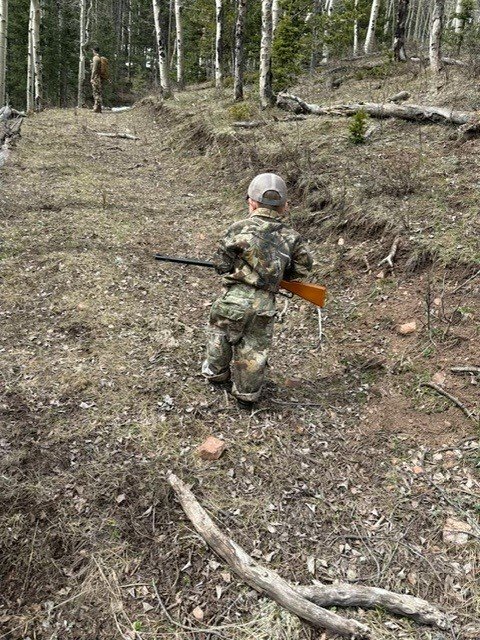
What kids can do at each age tier, the parallel programming options at a working ranch, three safety rules, and how the family-camp model differs from a hunter-only operation.
~1,800 words
How to choose a Colorado elk outfitter
Ten criteria to evaluate any outfitter — licensure, ratios, unit, private acreage, references, pricing transparency, conservation, lodging, scheduling, phone. Plus five red flags that should end a conversation early.
~2,200 words
Elk hunting fitness — train for the mountain
Cardio, leg strength, pack training, and altitude prep — the four things to build, a 12-week timeline, and the honest reason most hunts fall apart physically on day three.
~1,700 words
Elk hunting glossary
Every term a new elk hunter trips over, defined plainly — bugle, rut, GMU, OTC, preference points, broadside, wapiti, working ranch — each linked to the full reference.
~1,400 words
Best elk hunting boots — what to look for
Fit, support, waterproofing, insulation, and the break-in nobody wants to do — the five criteria that decide how day three feels, and why fit beats brand.
~1,400 words
Best binoculars for elk hunting
Why 10x42 is the do-everything, when to size up or down, what glass quality buys you, and the tripod that turns binoculars into a glassing system.
~1,400 words
Best elk hunting backpack
One feature separates an elk pack from any other: a frame that hauls 80+ lb of meat off a mountain. Fit and suspension, day vs multi-day volume, durability, and quiet access.
~1,400 words
Best rangefinder for elk hunting
In steep country the straight-line distance lies — why angle compensation matters most, realistic ranging distance on elk, archery vs rifle modes, and the glass for dawn.
~1,400 words
How to layer for elk hunting
A 20° dawn and a sweaty midday climb in one hunt. The base-mid-shell system, why cotton kills, 'be bold start cold,' and the packable puffy that keeps you on the glass.
~1,400 words
Elk hunting for beginners
The honest 10-step getting-started roadmap — DIY vs guided, choosing a state and tag, gear, fitness, shooting, tactics, field care, and realistic first-hunt expectations.
~2,000 words
On the ranch
Cattle, horses, lodge, conservation. The non-hunting side of a working ranch.
Colorado trout species
One native fish and three introduced — the orange-slashed cutthroat (state fish), the wary brown, the jeweled brook char, the acrobatic rainbow. What swims East Beaver Creek and how to tell them apart.
~1,400 words
Cattle drive vs. dude ranch — what's the difference
Both let you ride a horse. Only one is real ranch work. The 8-dimension comparison + quick decision rules.
~1,400 words
Cattle drive vacation — what to expect
What you actually do on a real cattle drive, what to wear and bring, the riding skill it takes (beginners welcome), and how an 8-hour day on horseback unfolds.
~1,500 words
Cattle drive vacation cost
A few hundred dollars for a day ride to thousands for a multi-day trip — what drives the price and what's included. Elk Glade's day drive is $1,495 for up to four, +$250 per extra rider.
~1,300 words
What to pack for a cattle drive
Boots with a heel, long pants, layers for mountain weather, and sun + rain protection — the real checklist for a comfortable day in the saddle, plus what to leave at home.
~1,200 words
Is a cattle drive hard?
Physical but accessible — the real challenge is saddle time, not danger or fitness, and the horses do the heavy lifting. What a day involves and why beginners ride one every season.
~1,100 words
Colorado fly fishing
The four Colorado trout (brown, brook, native cutthroat, rainbow), how seasons and hatches work, and what three miles of private, fly-only water on East Beaver Creek fishes like.
~1,500 words
Fly fishing for beginners
It looks like a dark art and it isn't. The gear that matters, how the cast really works (you cast the line, not the fly), approaching a stream without spooking fish, and clean catch-and-release.
~1,500 words
Dry fly vs nymph fishing
On top or below — the two ways to catch a trout. Why nymphs catch more fish, why dry flies are more fun, when to use each, and how a dry-dropper rig gives you both at once.
~1,400 words
Reading trout water
A stream stops looking random once you know what a trout wants — food, a current break, and cover. Riffles, runs, pools, seams, and pocket water, and how to find fish on a small mountain creek.
~1,400 words
What is a working ranch?
Working vs. dude vs. guest ranch — what each actually means, the real season-by-season work, and how the agritourism model lets guests join a genuine cattle operation.
~1,800 words
Regenerative ranching, explained
Leave the land better than you found it. The six core practices (rotational grazing, soil health, water, biodiversity), how it differs from conventional ranching, and the Audubon Conservation Ranching certification.
~1,800 words
The cow-calf operation, explained
The model behind most US beef. The ranching year from spring calving through summer grass, the fall gather and cattle drive, weaning and shipping — and why the mother cow herd, not the calves, is the asset.
~1,500 words
Beef cattle breeds, explained
Angus, Hereford, Charolais and the rest — British vs Continental breeds, the famous black-baldy cross, and why high-country ranches favor hardy British cattle and their crosses.
~1,400 words
Ranching glossary
Heifer, steer, cow-calf, weaning, AUM, allotment, branding — the working language of a Western cattle ranch, defined in plain English from A to Z.
~1,400 words
What is agritourism?
How a real working ranch opens its gate — cattle drives, stays, guided hunts, and events on land that works year-round. The five forms of agritourism and what separates the authentic from the staged.
~1,400 words
Best time to visit a Colorado ranch
No wrong season, only different ones — spring turkey and green-up, peak-summer rides and fishing, the golden-aspen elk rut and fall cattle drive, or deep winter quiet. Plan around what you came for.
~1,400 words
Grass-fed vs grain-fed beef
Nearly all cattle start on grass — so the label is really about the finish. What grass-finished means, the flavor and nutrition trade-offs, what the words guarantee, and how grazing ties to land health.
~1,500 words
Horseback riding for beginners
No experience needed — the horse has done this a thousand times. What to wear, how to mount and rein, how to relax and sit balanced, and what a guided first trail ride is really like.
~1,400 words
Got a question we don’t cover?
Call the ranch.
We publish guides on the questions we get the most. If you’ve got a specific scenario — your point count, a tag you’re trying to read, a private-land arrangement you’re working through — call us. The guides are general; the phone is for your situation.