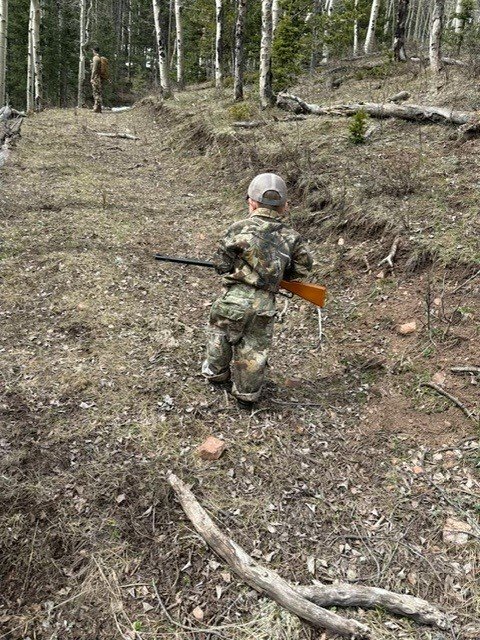
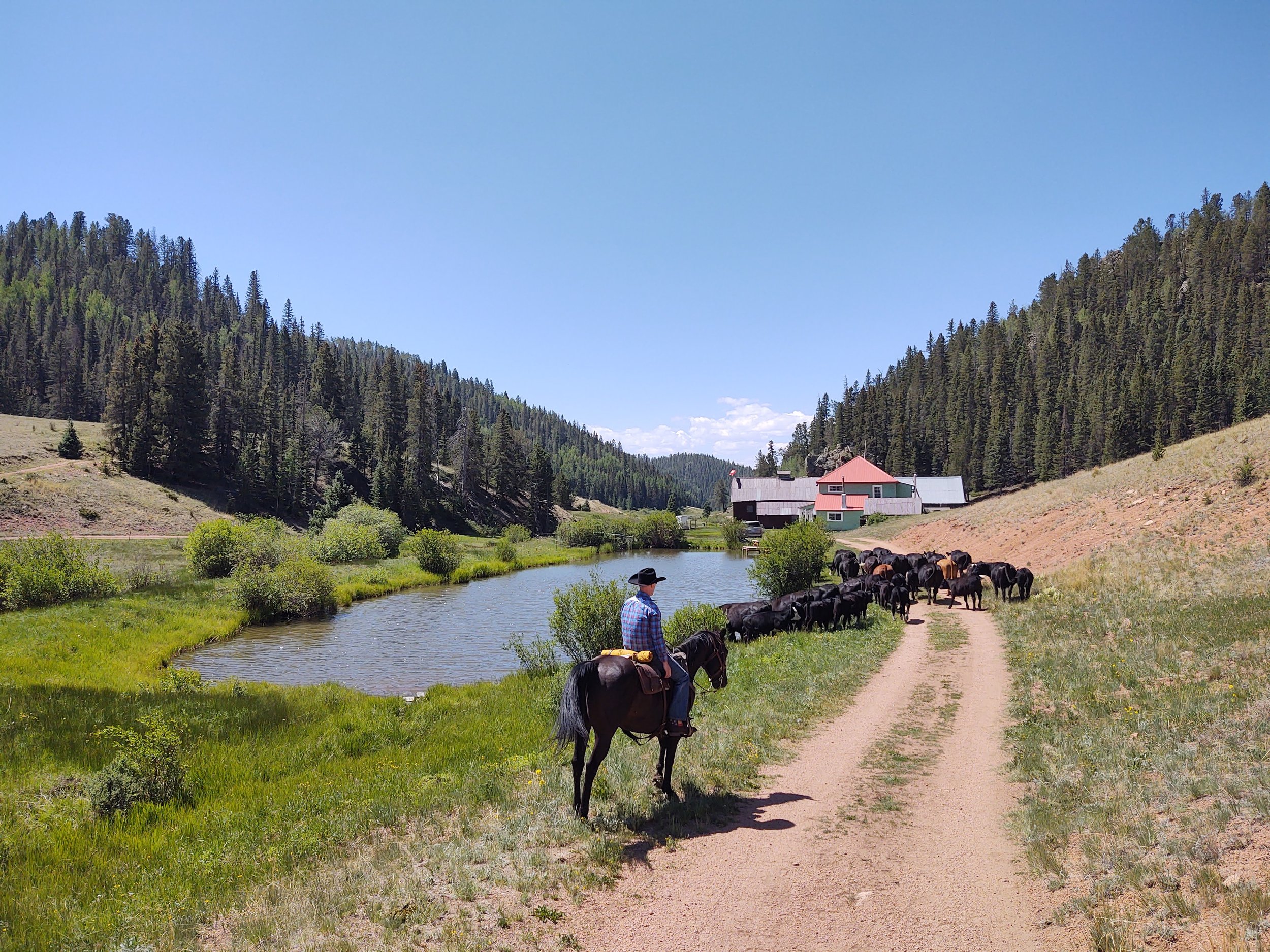
Water + wallows
Elk bed near water and hit wallows hard in the early rut. Springs, seeps, creeks, and stock ponds are anchors. A fresh wallow — churned mud, fresh tracks, the smell of a bull — is a high-value ambush site.
Field skill · Before the season
Most hunts are decided before opening day — by the hunter who knows the country. The two layers of scouting (the map and the boots), what to look for on the ground, when to do it, and why a guide's year of scouting is half of what you're paying for.
Two layers
Scouting happens in two stages. The first is e-scouting: studying the country from home with mapping apps — onX, BaseMap, Google Earth — to find the forest-meadow edges, the water, the bedding timber, the travel saddles, and the access. You can mark a dozen spots to check before you ever leave the driveway.
The second is boots on the ground: glassing elk on their range at first and last light, walking the country to confirm sign, and refining the map against what’s actually there. The map gets you to the right neighborhood; the boots tell you which house the elk live in.
What to look for
Elk bed near water and hit wallows hard in the early rut. Springs, seeps, creeks, and stock ponds are anchors. A fresh wallow — churned mud, fresh tracks, the smell of a bull — is a high-value ambush site.
Elk live where open feeding ground meets timber cover. Map the meadows, parks, burns, and old logging cuts against the dark timber beside them. The seam is where elk spend most of their lives.
Mature elk bed in dark north-facing timber and steep, secure pockets by day. You don't want to walk into it — you want to know where it is so you can intercept elk moving to and from it at first and last light.
Saddles, benches, ridgelines, and creek bottoms that connect bedding to feeding. Elk use them daily and seasonally. Find the pinch points where the country funnels them and you've found your setups.
Tracks, droppings, rubs on saplings, torn-up wallows, matted beds, and the trails worn between them. Fresh sign tells you elk are using an area now; old sign tells you they have before and may again.
Frequently asked
Elk scouting works in two layers. First, e-scouting: use mapping apps (onX, BaseMap, Google Earth) to find the forest-meadow edges, water, bedding timber, travel saddles, and access points before you ever leave home. Then boots-on-the-ground: glass elk on summer or early-season range at dawn and dusk, walk the country to confirm sign (tracks, rubs, wallows, scat), and refine the map against what you actually find.
Summer and late summer are ideal for glassing elk on their range and confirming patterns, but elk shift between summer and fall range, so what you see in July may move by October. E-scouting can happen any time. The most valuable scouting is in the weeks just before and during the season, when elk are on the country you'll actually hunt. Even in-season, the first day or two is often scouting.
E-scouting is using digital mapping tools — onX Hunt, BaseMap, Google Earth, CPW data — to study country from home before the hunt. You identify the forest-meadow edges, water sources, likely bedding timber, travel saddles and benches, public-private boundaries, and access points, building a list of spots to check on the ground. It dramatically shortens the time it takes to learn a new unit.
The key elk sign: fresh tracks and trails, droppings (wet and dark means recent), rubs where bulls have scraped saplings with their antlers, torn-up wallows with fresh mud and a strong smell, and matted beds in cover. Concentrations of fresh sign around water and on the meadow-timber edge tell you elk are using an area right now — exactly what you want to find.
No — that's a major part of what a guide provides. A good outfitter scouts the country year-round, knows where elk bed, water, and travel in the specific unit, and puts you in patterned country from day one. The guide has effectively done months of scouting on your behalf, which is one reason guided hunters skip the learning curve and post higher success rates. At Elk Glade, the GMU 59 country is scouted between cattle moves all year.