Parent · Heritage
Elk Glade
The umbrella. The 138-year story, the canyon, the family. Press, social, the magazine. The reason we exist.
About us · Heritage since 1888
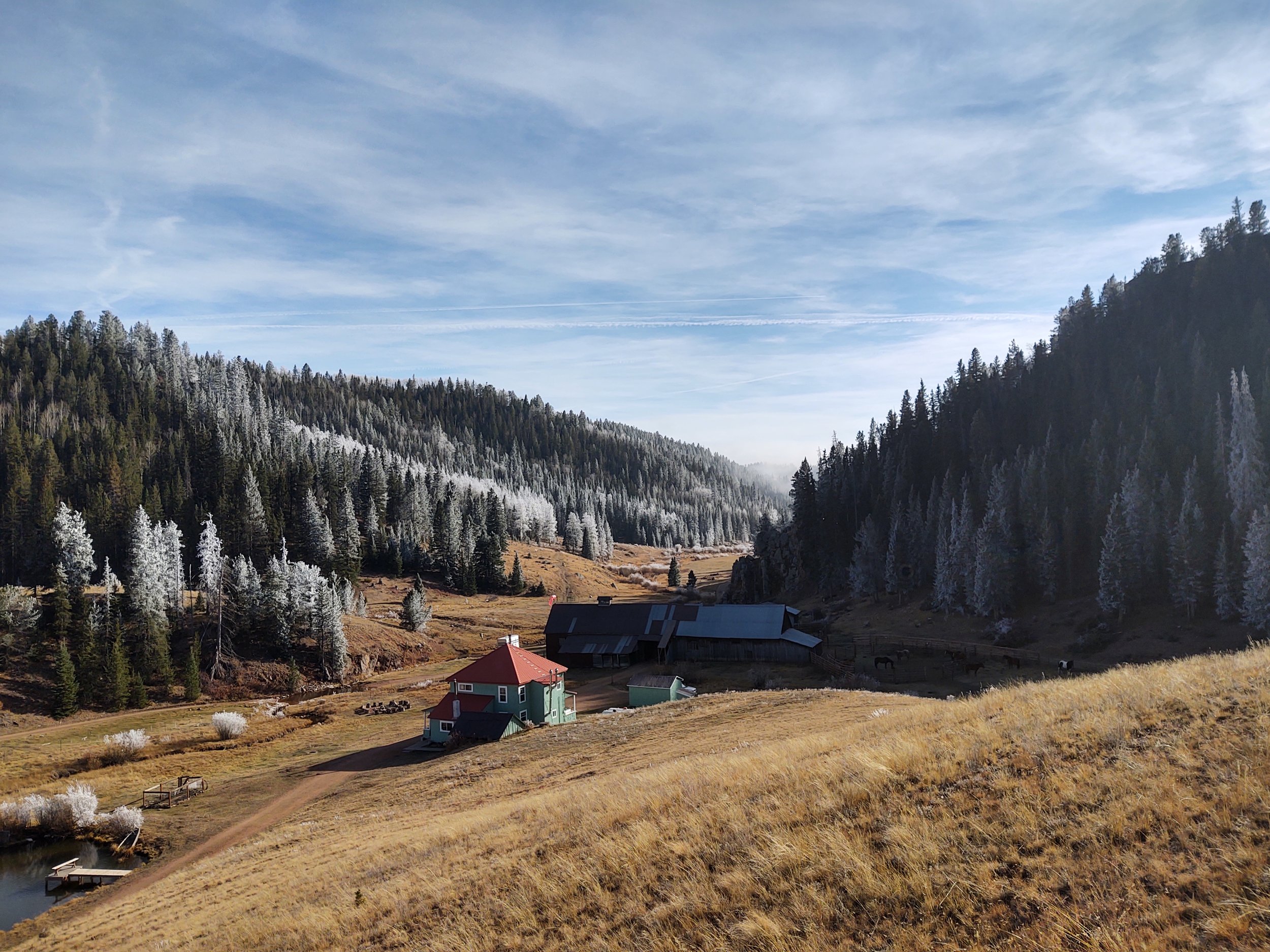
Tucked into the valley on the south slope of Pikes Peak — a founding 1888 ranch, a family that homesteaded here in 1929, and the two brothers who joined it all into one working operation.
At Elk Glade, we preserve a piece of living history. Tucked deep within the East Beaver Valley, our ranch is part of one of the last untouched canyons in the Colorado Front Range. With roots stretching back to the early 1800s, this valley was once home to homesteaders, miners, blacksmiths, and cattlemen — pioneers who forged a life in the wilderness with grit, reverence, and resilience.
Our mission today is simple but profound: to protect and carry forward the legacy of those original ranchers who lived and worked this land long before us. Their spirit lives on in every trail, stream, and ridgeline we guide our guests across. We're not reinventing this place — we're just stewards of something sacred, working to preserve its beauty, culture, and traditions for generations to come.
The lodge
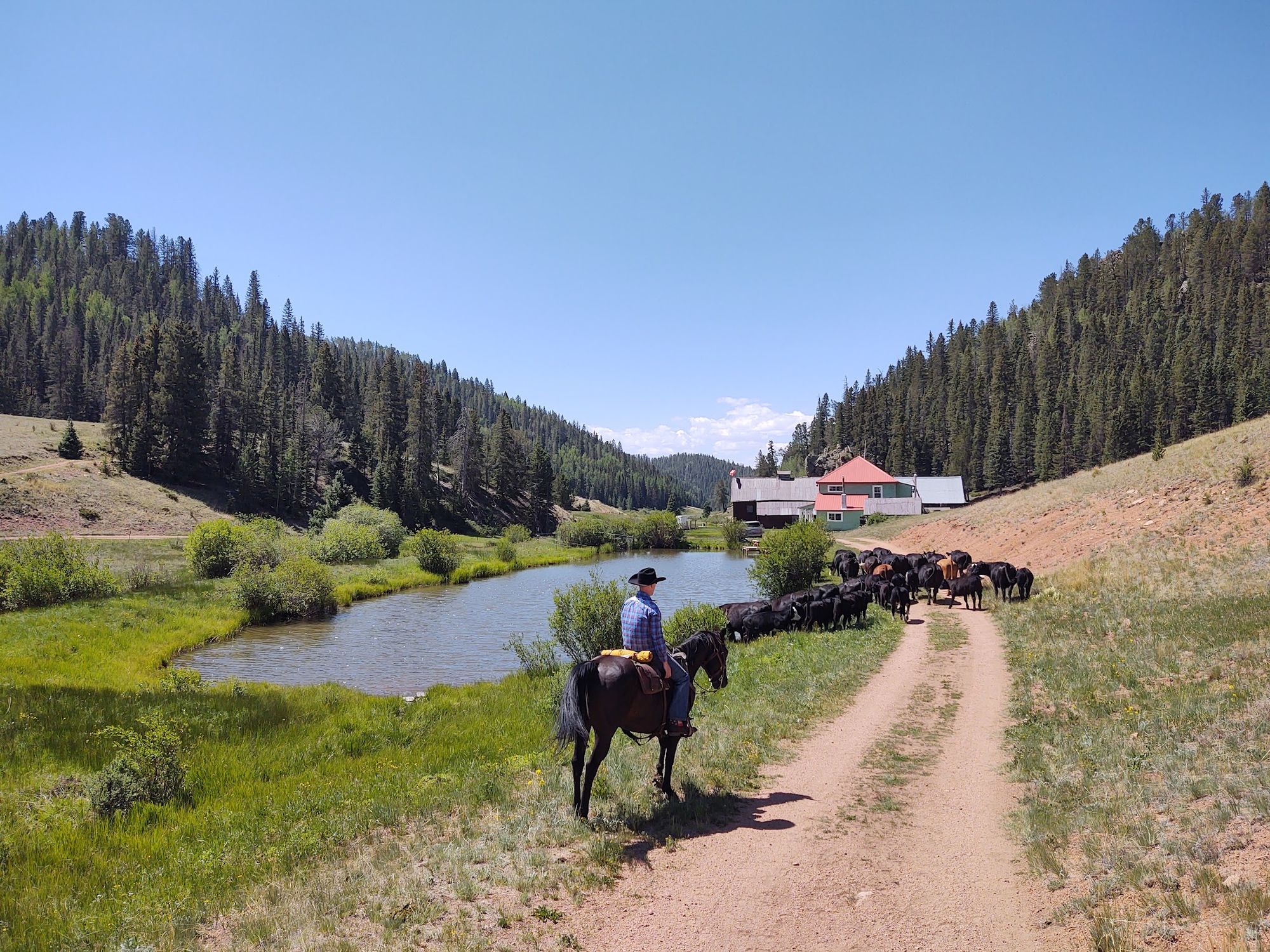
The house at the center of the ranch is a restored mining-camp hotel — an over-130-year-old miner’s hotel and ranch house that has stood on this ground since long before the state kept track of who was up here. Five bedrooms with extra-long beds, a parlor with a player piano, a large dining room, wood-and-fire heat, solar-powered lights, and two toilet-and-shower facilities. The front porch sits over the confluence of two trout streams, with a pond below it and a horseshoe pit in the yard.
The outbuildings have outlasted most of the towns that once surrounded them — a root cellar, a blacksmith shop, a slaughterhouse, and a barn, each better than a century old. Up the draws are the remnants of 1920s liquor stills and century-old working mines, homestead ruins abandoned more than 140 years ago, and — if you take the old hands at their word — a standing rumor of lost treasure. We didn’t build any of it. The work is to keep it standing.
The arc
The dates that matter. The rest is in the journal.
1888
The Rathke Ranch is established in the valley on the south slope of Pikes Peak — the founding, and for generations the dominant, working cattle ranch in the country that anchors Elk Glade today.
1929
Looking for a quiet place to write his thesis, Jim's grandfather researches homesteadable ground under the Homestead Act and sets out into the wilderness. He finds his Eden here and homesteads it — the family's first roots in the valley.
2001
Brothers Mark and Jim acquire the Rathke Ranch — the valley's founding 1888 property — and join it to the family's homestead ground. Two ranches become one operation, and the heritage is kept whole.
Today
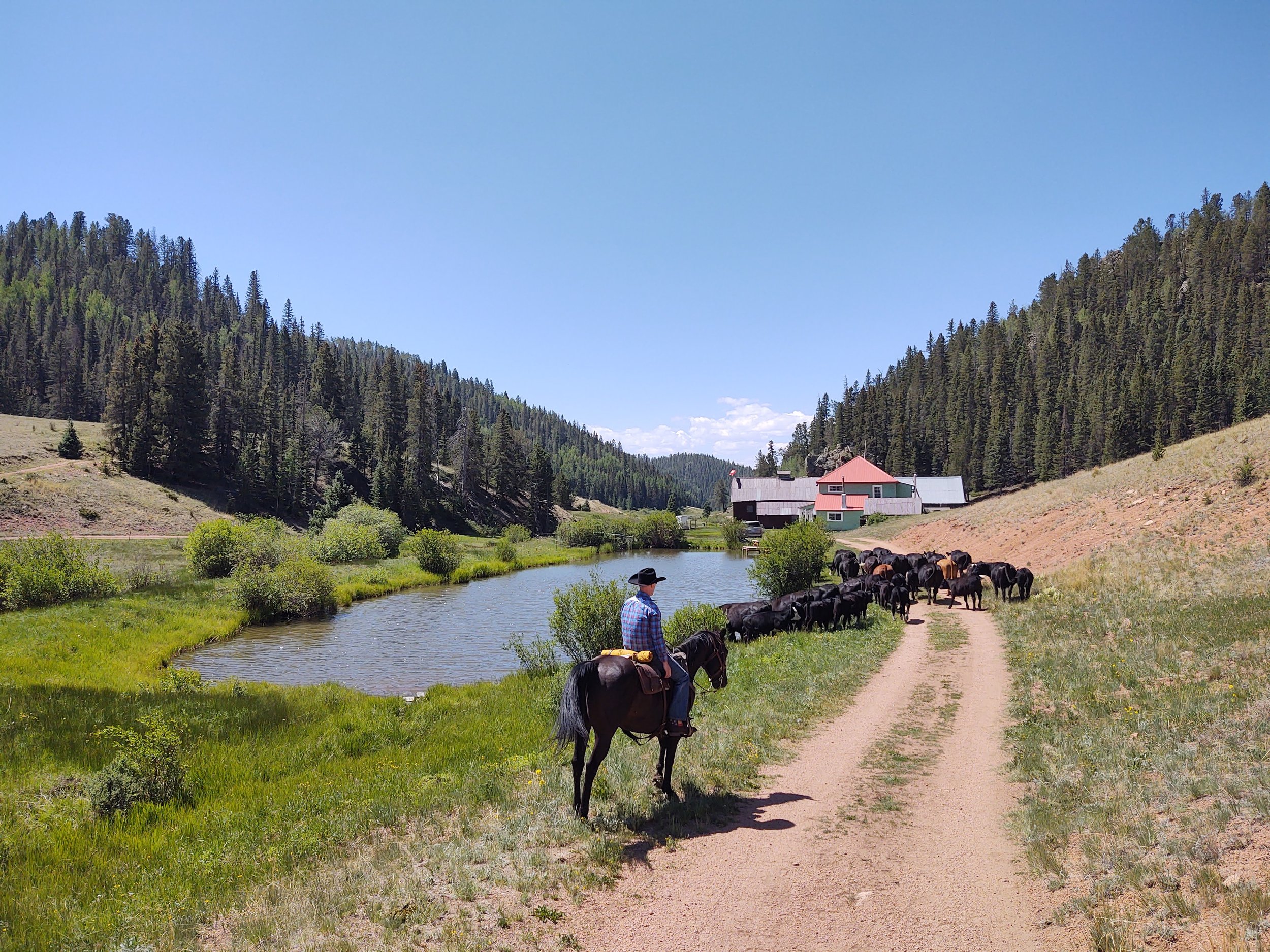
Mark and Jim run it now: a working ranch, its grass leased to a local rancher's cattle, with guided hunts, cattle drives, fly fishing, horseback, and ranch stays layered on top — the guest programs are how a real working ranch stays whole. The work is to honor the Western heritage of the cowboys, past and present, who have worked this place.
One canyon · Three names
Parent · Heritage
The umbrella. The 138-year story, the canyon, the family. Press, social, the magazine. The reason we exist.
Service arm
The licensed entity that books hunts, drives, fishing, horseback. Colorado DORA registered. The transactional voice — practical, specific, no marketing fluff.
Land + livestock
The working operation. Cow-calf, grazing, conservation, and land-stewardship partnerships. The voice rooted in season-by-season ranch work.
Stewardship
We try not to break the run. The conservation work — recognized with a Colorado Parks & Wildlife grant for protecting the largest wildlife corridor between New Mexico and Wyoming on the Front Range, and carried alongside partners like the Colorado Cattlemen’s Agricultural Land Trust, the Western Landowners Alliance, and the Palmer Land Conservancy — is the part of the operation that takes the longest to show and is most likely to matter when our great-grandchildren are walking these benches.
Read the ranching-history page