Bull elk (primary draw target)
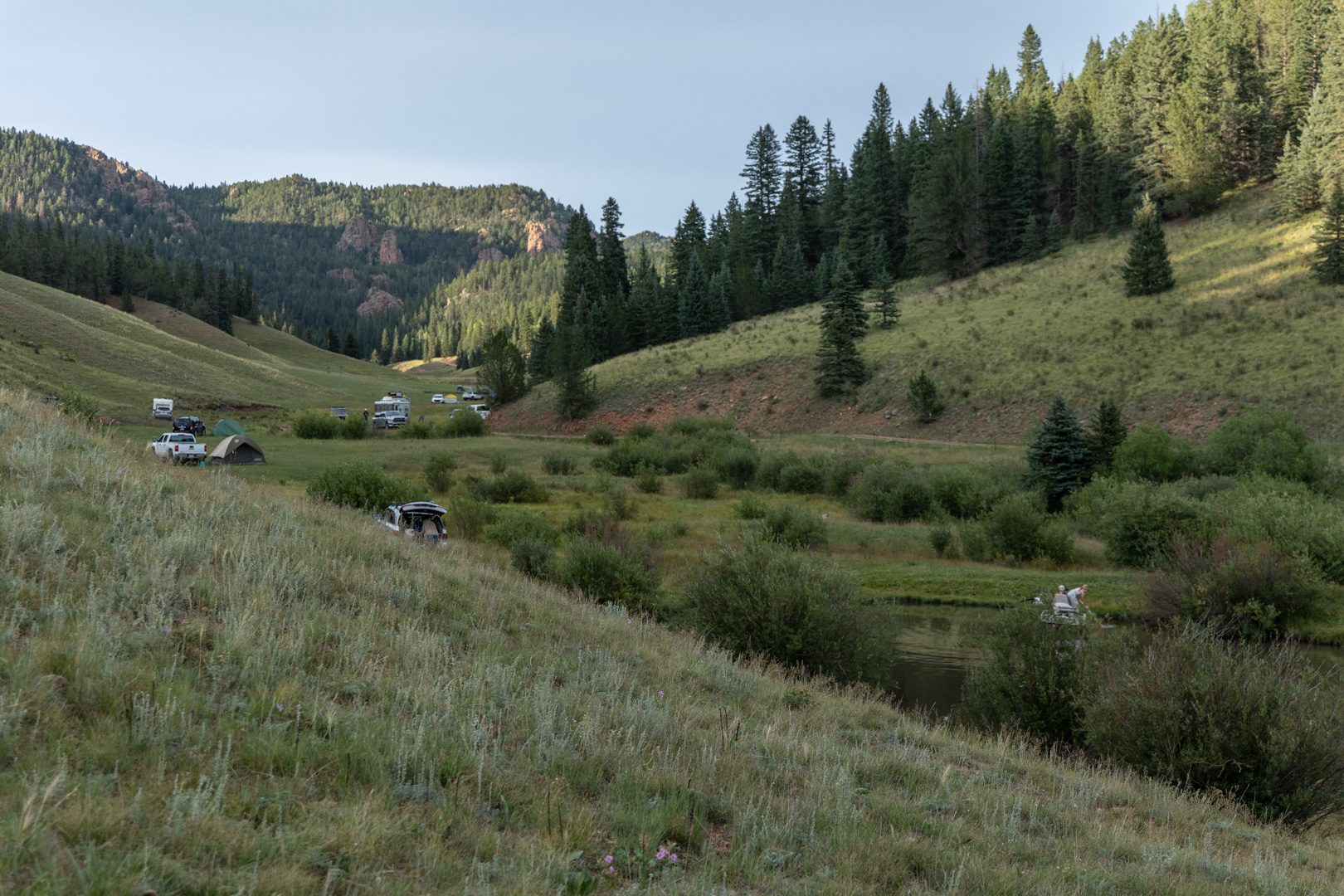
GMU 59 holds a year-round resident bull-elk population estimated at roughly 2,000–2,800 animals (CPW herd unit data, recent years). The herd uses the south-facing benches between 8,500 and 10,500 ft as primary feeding grounds in September–November, with summering grounds above 11,000 ft and winter range below 8,000 ft on the south-facing exposures.
Average bull score in the unit runs 280–305 typical, with regular 320–340 bulls taken in any given season and occasional 350+ on private land. Cow elk are available on most weapon classes via either-sex draw or cow-specific limited entry.
See our bull elk hunt page and weapon-class subpages (archery, muzzleloader, rifle) for tactics specific to the unit.
Mule deer
GMU 59 mule deer is limited entry across all seasons. The herd is smaller than the elk herd — roughly 600–900 animals — with most bucks taken in the 150–170 class and occasional 180+ on the willow draws above the cattleguards. The country here holds mature bucks because the south face has water year-round and low hunter density.
See our mule deer hunt page for the unit- specific tactics and combined-season planning.
Black bear
At Elk Glade, black bear is hunted alongside elk on the six-night Elk + Deer or Bear combo (if successful). See 2026 hunt pricing.
Merriam’s turkey (spring)
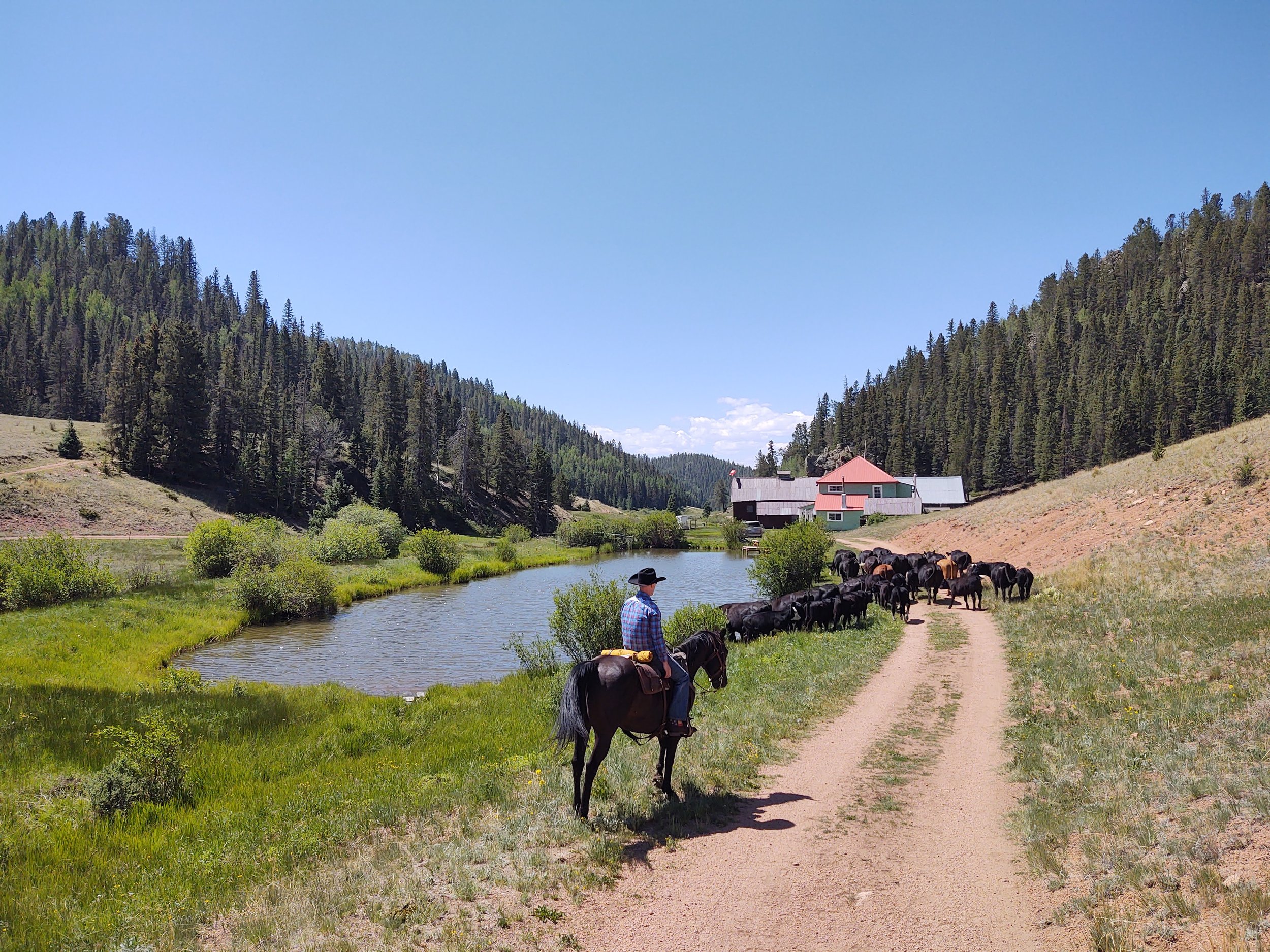
GMU 59 holds a healthy resident Merriam’s turkey population in the ponderosa benches above 7,500 ft, particularly on the south-facing slopes between the lodge meadows and the canyon rims. Spring season runs early April through late May; private-land hunts open one week ahead of the public season.
See our spring turkey hunt page.
Mountain lion (limited)
Limited late-season mountain lion permits available through CPW draw. Lions are present year-round but rarely encountered during the elk/deer seasons. We do not run guided lion hunts at Elk Glade.
Small game
Cottontail rabbit, snowshoe hare, ptarmigan (above 11,000 ft), and dusky and blue grouse all present in the unit. Most of our hunters who pursue small game do so opportunistically during big-game seasons rather than as a primary hunt.