Skip to content

The complete reference · Odocoileus hemionus

Mule deer.

The big-eared deer of the American West — forked antlers, a black-tipped tail, and a bounding stot that carries it over broken country like it's on springs. Size, range, diet, behavior, and how to tell it from a whitetail at a glance.

At a glance

The mule deer, by the numbers.

Scientific name
Odocoileus hemionus
Named for
Its large, mule-like ears
Buck weight
150–300 lb
Doe weight
95–200 lb
Antlers
Bifurcated — each beam forks into forks
Tail
White with a black tip; white rump patch
Signature move
Stotting — bouncing on all four legs at once
Range
Western North America
Rut
November
Diet
Browser — shrubs, forbs, more than grass

The animal

Built for broken country.

The mule deer is the West’s own deer — a blockier, bigger-eared animal than the whitetail, built for sagebrush flats, foothill breaks, and mountain slopes rather than farm-country edges. The ears that name it are radar; the forked antlers split evenly where a whitetail’s throw single tines off one beam; and the black-tipped tail and pale rump set it apart at distance.

Its most memorable trait is how it leaves. Where a whitetail runs low and fast with its tail flagging white, a spooked mule deer stots— bounding away on all four stiff legs at once, springing high over rock and brush like the ground is a trampoline. It looks almost comic until you watch one cover a boulder field at speed and realize it’s the perfect gait for the country.

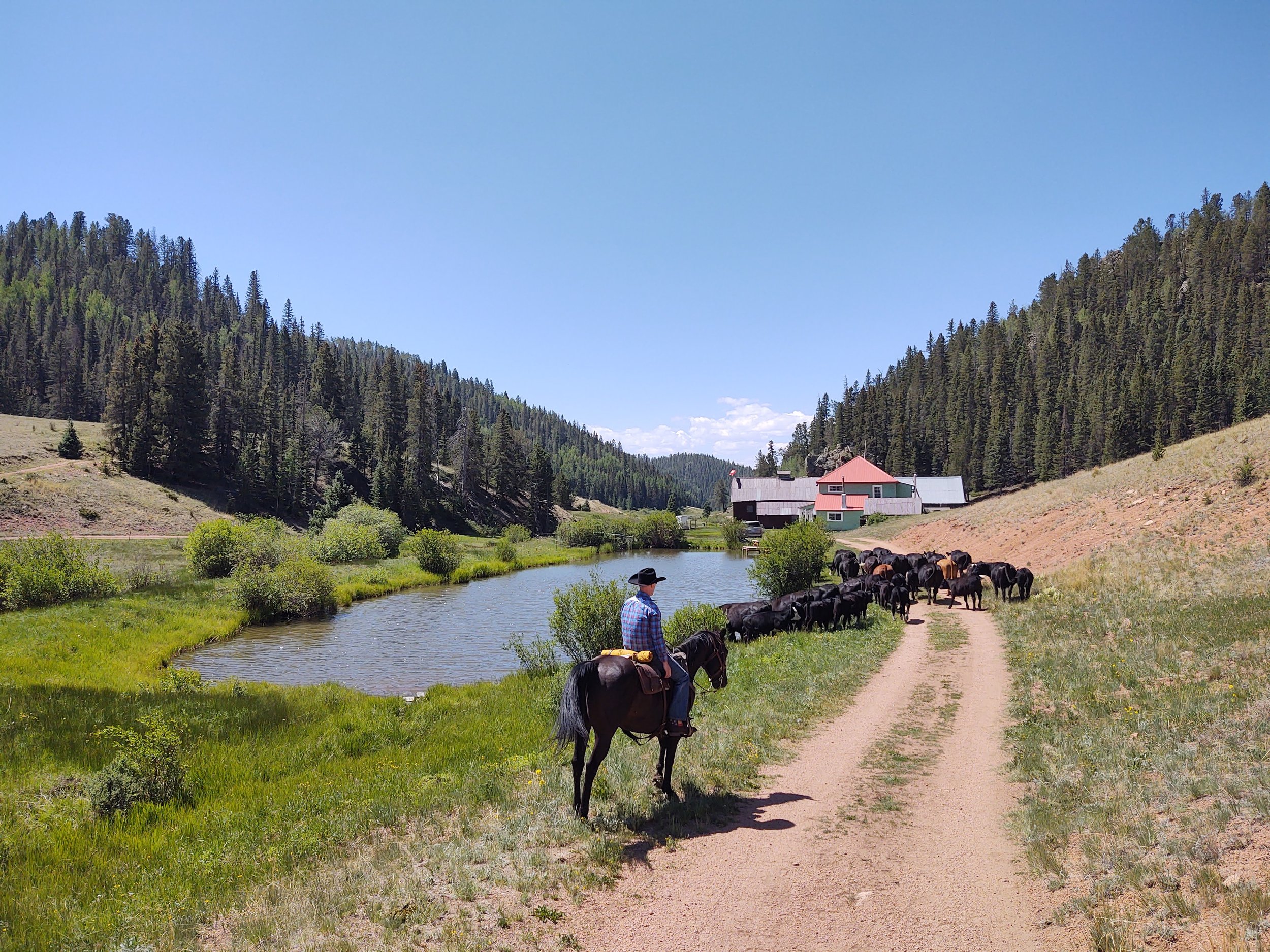
On the south slope of Pikes Peak, mule deer share the East Beaver Valley benches with elk, working the brushy, steeper pockets the elk pass over. The same low-pressure, limited-entry country that holds mature bulls holds heavy-beamed mule deer bucks.

Go deeper

More on the mule deer.

Mule deer vs. whitetail

Ears, tail, antler fork, and the bounding stot versus the flag-and-run. The full side-by-side on the two deer people mix up most.

Read more →

Hunt mule deer at Elk Glade

Guided mule deer hunts on GMU 59 limited entry — combined with elk, or archery and muzzleloader. 150–170 typical buck class.

Read more →

Mule deer antlers

The forked-and-forked-again rack that defines the species, the Western point count, the growth cycle, and how a muley makes the book.

Read more →

The mule deer rut

November, and the one window when a ghost of a buck drops his guard, moves in daylight, and makes a mistake.

Read more →

How big is a mule deer?

Buck and doe weights, shoulder height, the eight-inch ears, and how size shifts from the northern Rockies to the desert Southwest.

Read more →

Where mule deer live

Sagebrush, foothills, and canyon country, seasonal elevation moves, and the migrations that move whole herds 150 miles.

Read more →

What mule deer eat

Not a grass-eater — a picky browser of bitterbrush, sagebrush, and forb. The seasonal diet and why winter browse decides the herd.

Read more →

What eats mule deer

The lion, the coyote, the bobcat, the bear — and how the bounding stot, the big ears, and sharp eyes keep a muley alive.

Read more →

25 mule deer facts

The mule ears, the forked rack, the pogo-stick stot, the 150-mile migrations — the most striking verified facts, scannable.

Read more →

Mule deer behavior

The bouncing stot gait, loose family groups instead of big herds, dawn-and-dusk feeding, and the quiet November rut that's nothing like an elk's.

Read more →

Mule deer migration

Some of the longest land-animal journeys in the Lower 48 — up to 150 miles between summer and winter range, surfing the green wave up and snow back down.

Read more →

How long mule deer live

Around 9 to 11 years wild, does outlasting bucks, and the lions, winters, worn teeth, and disease that set the limit.

Read more →

Elk vs. deer

How mule deer and whitetail both stack up against their much larger cousin, the elk.

Read more →

Frequently asked

Mule deer questions.

What is a mule deer?

A mule deer (Odocoileus hemionus) is a deer of western North America, named for its large mule-like ears. Bucks weigh 150–300 pounds and carry forked (bifurcated) antlers where each beam splits into matching forks. Mule deer are distinguished from whitetails by their big ears, black-tipped tail, forked antlers, and a unique bounding gait called stotting.
What is the difference between a mule deer and a whitetail?

Mule deer have larger ears, a black-tipped white tail (versus the whitetail's all-white underside that flags up when it runs), and forked antlers where each beam splits evenly — while whitetail antlers have single tines coming off one main beam. Mule deer also 'stot,' bounding on all four legs at once, while whitetails run and flag their tails. Mule deer are western; whitetails range across most of the continent.

How big do mule deer get?

Mule deer bucks typically weigh 150 to 300 pounds, with the largest northern bucks at the top of that range; does weigh 95 to 200 pounds. They stand around 3 to 3.5 feet at the shoulder. A mature buck is noticeably larger and heavier-bodied than a whitetail of the same region, with a blockier build suited to rough, open western country.

What do mule deer eat?

Mule deer are browsers more than grazers — they eat shrubs, woody browse, forbs (broad-leaved plants), and the buds and leaves of trees, with grasses making up a smaller part of the diet than for elk or cattle. This browse-heavy diet suits the sagebrush, foothill, and mountain country they favor across the West.

What is stotting?

Stotting (also called pronking) is the mule deer's signature escape gait — bounding away with all four legs hitting the ground together, springing high off stiff legs. It looks like the deer is on a pogo stick. It lets a mule deer cover rough, broken western terrain fast and may signal fitness to predators. It's one of the quickest ways to tell a fleeing mule deer from a running, tail-flagging whitetail.

Where do mule deer live?

Mule deer live across western North America — from the Rocky Mountains and Great Basin to the desert Southwest and up into Canada — favoring sagebrush flats, foothills, broken canyon country, and mountain slopes. The coastal black-tailed deer of the Pacific Northwest is a mule deer subspecies group. Elk Glade hunts Rocky Mountain mule deer on GMU 59, on the south slope of Pikes Peak.

Hunt the West's deer

Guided mule deer on GMU 59.

Elk Glade guides mule deer on the south slope of Pikes Peak — limited entry, low pressure, combined with elk or on archery and muzzleloader. Heavy-beamed bucks in the 150–170 class.