Skip to content

Elk reference · Comparison

Elk vs. deer.

Same family, very different animal. An elk outweighs a deer three to five times over, runs in cow-led herds, and bugles instead of grunting. The head-to-head on size, antlers, behavior, and the centuries-old naming mix-up that calls the same word two different animals.

Head to head

Elk and deer, trait by trait.

TraitElkDeer (mule / whitetail)
FamilyCervidae (deer family)Cervidae (deer family)
Bull / buck weight700–1,100 lb150–300 lb (mule deer/whitetail)
Shoulder height4.5–5 ft3–3.5 ft
AntlersLong sweeping main beams, vertical tines, 6x6 commonSmaller; whitetail tines off one main beam, mule deer forked (bifurcated)
RumpPale buff/cream patch ('wapiti' = white rump)Whitetail: white underside of tail; mule deer: white rump, black-tipped tail
SocialHerd animal; cow-led groupsMore solitary or small family groups
Rut soundBugle (rising scream + grunts)Grunts, wheezes, snort-wheeze
HabitatForest-meadow edge, high countryEdges, brush, farmland, broad range of cover
RangeWestern US + reintroduced eastWhitetail nearly continent-wide; mule deer western

The quick answer

Size settles it.

If you only remember one thing: an elk is the size of a horse and a deer is the size of a large dog. A bull elk runs 700 to 1,100 pounds and stands close to five feet at the shoulder; a mule deer or whitetail buck is 150 to 300 pounds and stands three feet. Standing side by side, there is no mistaking them.

Past size, look at the rump (elk wear a pale buff patch — the literal source of the name “wapiti,” white rump), the neck (elk carry a dark shaggy mane the body color doesn’t share), and the behavior (elk move in herds and bugle; deer are quieter and more scattered). The antlers differ too — elk sweep long beams backward with vertical tines, while a mule deer forks and a whitetail throws tines up off one main beam.

Frequently asked

Elk vs deer questions.

What is the difference between an elk and a deer?

Elk and deer are both members of the deer family (Cervidae), but elk are far larger — a bull elk weighs 700–1,100 pounds versus 150–300 for a mule deer or whitetail buck. Elk stand about five feet at the shoulder, live in herds, and bugle during the rut. Deer are shorter, more solitary, and grunt. Elk antlers sweep back into long beams with vertical tines; deer antlers are smaller and branch differently.
How can you tell an elk from a deer at a distance?

Size is the giveaway — an elk is roughly three to five times the weight of a deer and stands a head taller. Look for the elk's pale buff rump patch, its tan body with a darker neck and 'mane,' and its sheer bulk. Deer are smaller, more delicate, and (in the case of whitetails) flash a white tail when alarmed. If it's the size of a horse, it's an elk; if it's the size of a large dog, it's a deer.

Are elk just big deer?

In a sense — elk are the second-largest member of the deer family, behind moose. So yes, an elk is a kind of deer, but it's a distinct species (Cervus canadensis) from the whitetail (Odocoileus virginianus) and mule deer (Odocoileus hemionus). They differ in size, antler shape, social behavior, vocalization, and habitat use, even though they share the family.

Do elk and deer live together?

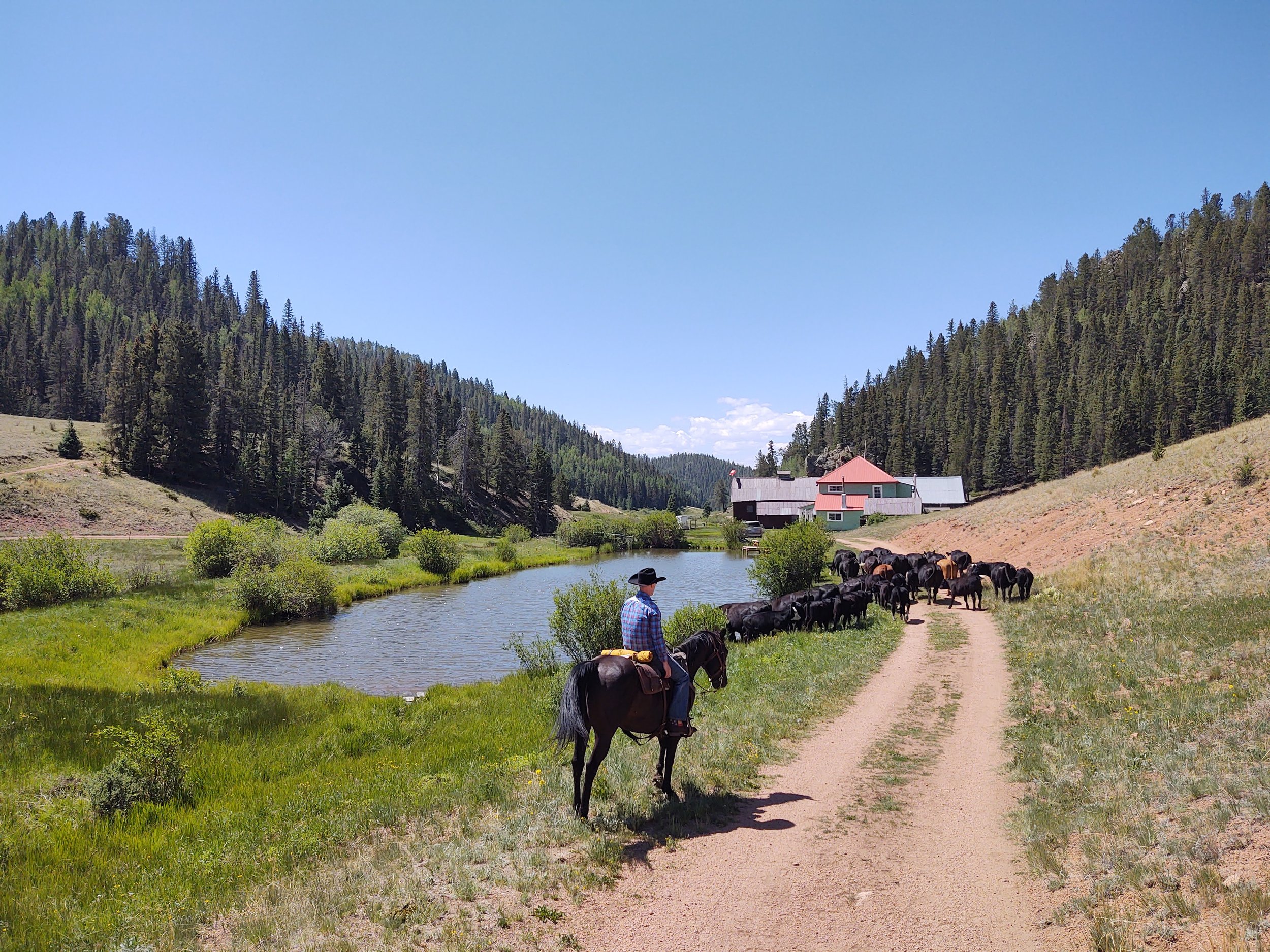
Yes, elk and deer ranges overlap widely across the western United States, and they often share the same drainages, meadows, and winter range. Elk Glade's GMU 59 country holds both elk and mule deer, and combined hunts are common. They tolerate each other but tend to use slightly different niches — deer favor brushier, steeper pockets while elk work the larger meadow-timber edges.

Why is an elk called a deer in some places and a moose in others?

It's a transatlantic naming tangle. In North America, 'elk' means Cervus canadensis (the wapiti). In Europe, 'elk' refers to the animal Americans call a moose (Alces alces). Early European settlers misapplied their word 'elk' to the wapiti, and the name stuck in North America. Wildlife biologists use 'wapiti' to avoid the confusion entirely.

From the page to the field

Hunt elk where the herd is largest.

Elk Glade guides bull elk on GMU 59 limited entry, on the south slope of Pikes Peak — inside the largest elk population on Earth. Archery, muzzleloader, and four rifle seasons.