Ranching · The cow-calf year
How a cattle ranch actually works.
Most American beef starts the same way — in a cow-calf operation, where a herd of mother cows raises a calf crop on grass. The ranching year from spring calving through the fall cattle drive, and why the cow herd, not the calves, is the asset.
The model
The cows stay. The calves go.
Strip a cattle ranch down to its logic and it’s simple. A rancher keeps a herd of mother cows — the asset, held for years. Each spring those cows calve. The calves grow through the summer on milk and grass, and in the fall most are sold. The cows stay and do it again. That’s a cow-calf operation, and it’s the first link in the chain that produces nearly all American beef.
Everything else — the breeds, the grazing, the gather, the drive — is in service of that cycle: get a live, healthy calf from every cow, grow it cheaply on grass, and keep the land good enough to do it again next year. The whole art of ranching is matching the herd to the country, season by season.
The ranching year
One turn around the calendar.
Late winter / spring
Calving. Cows drop their calves, ideally in a tight window so the calf crop is even. This is the most labor-intensive, sleep-short stretch of the year — checking heavies, pulling a hard birth, pairing up.
Spring
Branding & turnout. The calf crop is gathered and worked — branded, vaccinated, the bull calves castrated — then cows and calves are 'turned out' onto summer grass, often a high-country allotment.
Summer
Grass. Cattle graze the summer country while the calves grow on their mothers' milk and grass. Riders check water, move cattle between pastures, and keep them out of sensitive ground.
Early fall
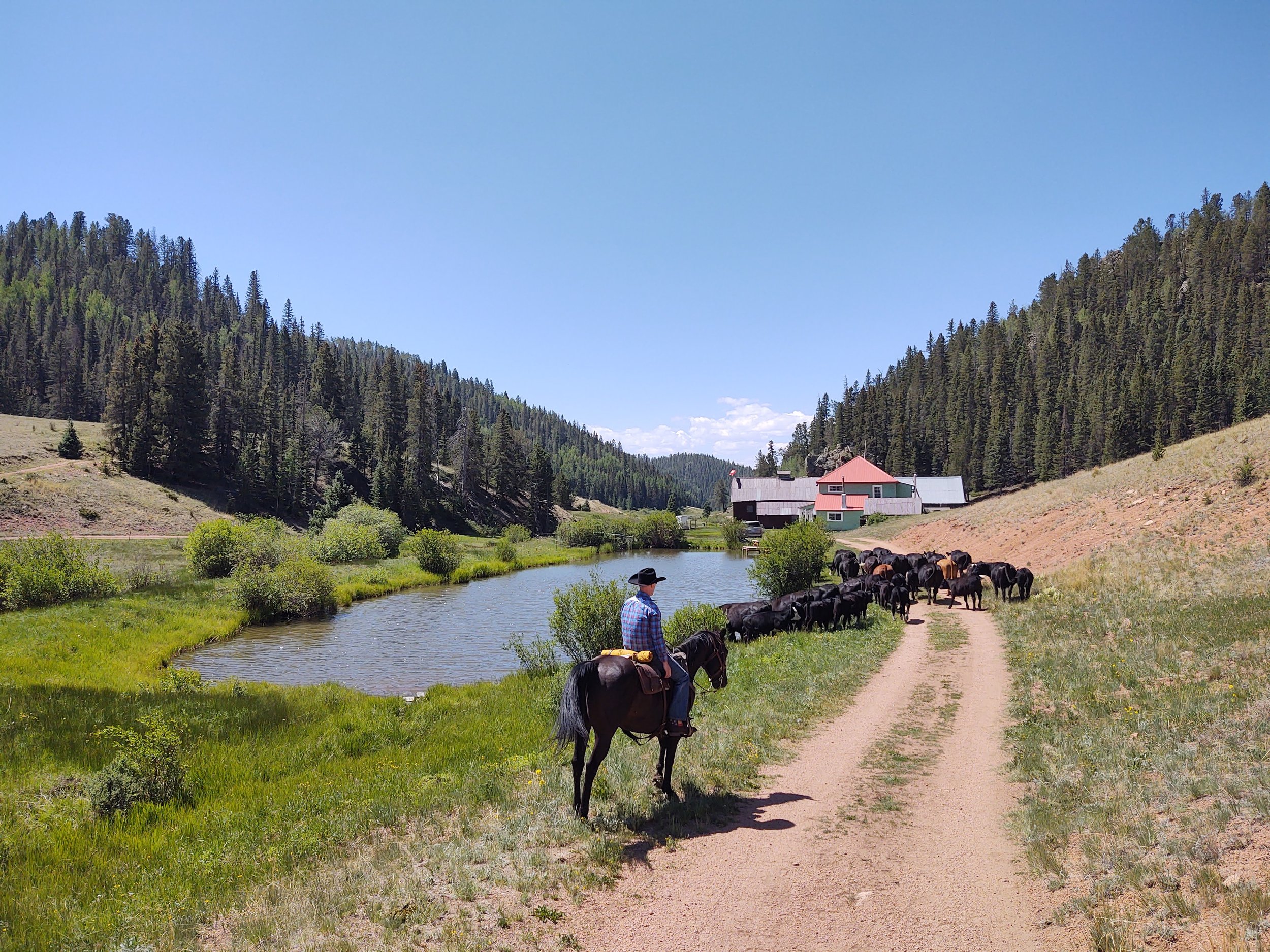
The gather & drive. Cattle are gathered off the summer range and moved down — the cattle drive — ahead of the weather. This seasonal move is the work guests can ride along on.
Fall
Weaning & shipping. Calves are separated from the cows at 6–8 months and sold as feeders or stockers, or kept back as replacement heifers. The calf crop is the year's paycheck.
Winter
Carrying the cows. The mother herd is fed and carried through winter — hay, supplement, shelter — bred and waiting to calve again. The cycle resets.
The fall gather — moving the herd down off summer grass — is the work our guests can ride along for. It’s a real cattle drive on a real working ranch, not a staged one.
Frequently asked
Cow-calf questions.
What is a cow-calf operation?
A cow-calf operation is a ranch that keeps a permanent herd of mother cows, breeds them every year, and raises calves to sell at weaning. The cows are the asset and stay on the ranch year after year; the calf crop is the annual product. It's the first link in the beef supply chain — calves move from here to backgrounders and feedlots before finishing.
How does a cattle ranch make money?
In a cow-calf operation, the income is the calf crop sold each fall — weaned calves go to market as feeders or stockers. A ranch may also sell cull cows, replacement heifers, or hay, and many Western ranches add revenue through hunting access, guest experiences like cattle drives, and conservation programs. The mother cow herd itself is held as a long-term producing asset, not sold.
Why do ranches move cattle seasonally?
Mountain ranches graze high summer country when it greens up and bring cattle down before snow — turnout in spring, the gather and drive in fall. Moving cattle matches the herd to where the forage is, rests the home pastures, and protects the high country from being grazed at the wrong time. That fall move down off the mountain is the classic cattle drive.
What is the difference between a cow-calf operation and a feedlot?
A cow-calf operation breeds cows and raises calves on grass to weaning age — it's about mother cows and pasture. A feedlot is the finishing stage downstream, where weaned cattle are fed a grain ration to market weight. Most ranches are cow-calf; relatively few operations are feedlots. The two are different links in the same chain.
Can you experience a real cattle ranch?
Yes. On a working ranch you can ride along for the seasonal cattle drive — the fall gather that moves the herd off summer grass — and take part in the real work of a cow-calf operation rather than a staged show. It's hands-on, weather-dependent, and unforgettable. See the cattle drive experience for how it works.