- Allotment
- A defined area of public land (BLM or US Forest Service) a rancher is permitted to graze cattle on, under a federal grazing lease. Measured and billed in AUMs.
- AUM (Animal Unit Month)
- The amount of forage one cow-calf pair eats in a month — the standard unit for measuring and pricing grazing on public allotments and leases.
- Backgrounding
- Growing weaned calves on grass or forage for a period before they go to a feedlot — adding frame and weight cheaply on pasture.
- Bull
- An intact (uncastrated) male kept for breeding. A ranch runs a small number of bulls relative to its cows.
- Branding
- Marking calves with the ranch's registered brand for permanent proof of ownership — historically a hot iron, today sometimes a freeze brand. Spring branding is a major work day on many ranches.
- Calf crop
- The group of calves born in a given year, and the percentage of cows that successfully raise a calf — a key measure of a ranch's productivity.
- Cow-calf operation
- The most common ranching model: keep a herd of mother cows, breed them yearly, and sell the weaned calves. The foundation of US beef.
- Cull
- To remove an animal from the herd — an old, open (un-bred), or unproductive cow — usually by selling her. Culling keeps the herd productive.
- Dry / Open cow
- A cow that failed to breed and is not carrying a calf. Open cows are usually culled because they eat without producing a calf.
- Feeder / Stocker
- A weaned calf or yearling sold to be grown further — a 'stocker' goes onto grass, a 'feeder' goes toward a feedlot for finishing.
- Gather
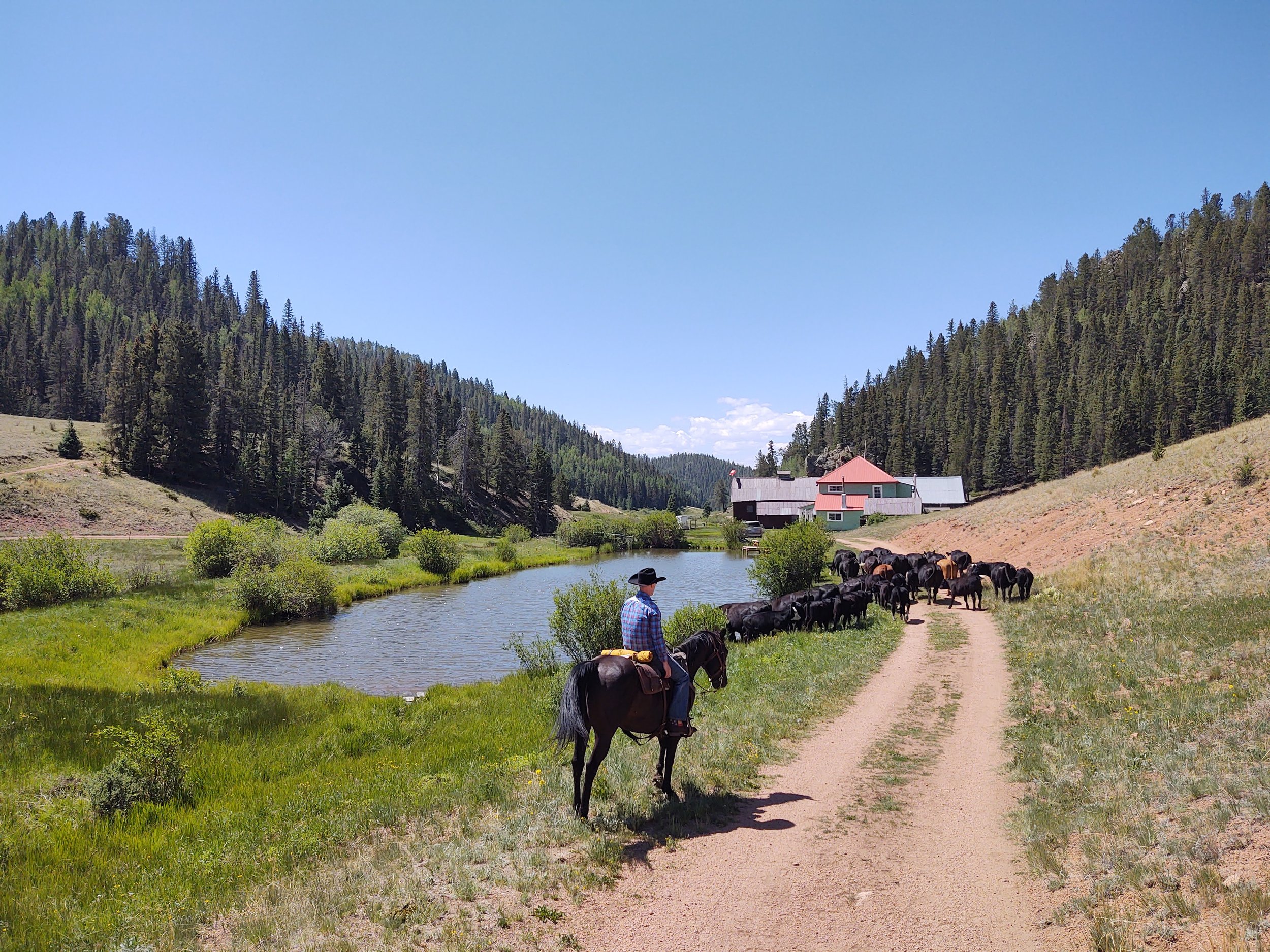
- To round up and bring in cattle scattered across big country — often on horseback. A 'gather' precedes branding, weaning, shipping, or a move.
- Heifer
- A young female that has not yet had a calf. A 'bred heifer' is carrying her first; a 'replacement heifer' is kept to grow into the cow herd.
- Open range / Allotment riding
- Managing cattle across large unfenced or lightly fenced public grazing land, where riders check and move cattle rather than rely on small pastures.
- Pairs
- Cow-calf pairs — a mother cow and her nursing calf, counted and moved together through the grazing season.
- Riparian
- The green, water-influenced ground along a creek or spring. Riparian areas are the most sensitive and valuable forage and habitat, and good grazing management protects them.
- Rotational grazing
- Moving cattle through a series of pastures so each one is grazed hard for a short time and then rested to recover — the core practice of regenerative ranching.
- Steer
- A castrated male raised for beef rather than breeding. Steers grow efficiently and make up much of the calf crop sold each fall.
- Stocking rate
- How many animals a piece of land can carry without overgrazing — set by forage, rainfall, and terrain. Getting it right is the central discipline of ranching.
- Turnout
- The day cattle are 'turned out' onto summer grass — often a high-country allotment — at the start of the grazing season. The fall move brings them back down.
- Weaning
- Separating calves from their mothers, usually in fall at 6–8 months. Weaned calves are then sold, backgrounded, or kept as replacements.
- Yearling
- An animal in its second year — a calf grown out through one winter. Yearlings are often sold as stockers or feeders.