Phenology · Sep through early Oct · Updated 2026-05-29
When the rut peaks. What that actually changes.
Five phases from pre-rut velvet shed through post-rut recovery. What the bulls do, what the cows do, and how the calling strategy shifts. Written from south-slope Pikes Peak observation but calibrated for the broader Colorado season.
The short version
Peak estrus lands September 15–25. Peak bugling lands September 5–15.
These two windows don’t line up — and understanding the gap is the single most important read for archery and muzzleloader hunters. Bulls are loudest while they’re still looking for cows. Once they’re locked on a herd, they get quieter.
The cold-weather modifier sits on top of biology. A cold front in mid-September turns peak-rut lockdown into the loudest morning of the year; a warm front in early September shuts down pre-rut. The biology is fixed by photoperiod; the volume is weather-driven.
Five phases
What the bulls do. What the cows do. What you do.
Late August – Early September
Pre-rut · velvet shed
- Bulls
- Bulls peel velvet, harden antlers, begin re-establishing dominance. Bachelor groups break up. Heavy bugling not yet — short location calls, mostly at dawn and dusk.
- Cows
- Cows are still in pre-estrus and largely in mixed nursery groups. They are summer-fat and not yet aggressive about moving.
- Behavior
- Bulls scrape trees, work wallows, walk fence lines and meadow edges scent-checking for cows.
- What it means for the hunt
- Archery hasn't opened yet (Sep 2). For early-September archery: target water and wallows, not calling.
Sep 5 – Sep 15
Pre-rut · seeking
- Bulls
- Bugling intensifies week-over-week. Satellite bulls aggressive, herd bulls starting to gather small harems. Daylight movement increases as testosterone peaks.
- Cows
- Some cows hitting estrus on the front edge. Most still in nursery groups, beginning to fragment.
- Behavior
- Bulls cruise hard. Cold mornings produce the loudest bugling of the year — pre-frost air carries sound.
- What it means for the hunt
- Peak archery calling window. Cow calls + bugle sequences work because herd bulls haven't fully locked down their cows yet. Spot-and-stalk on bedded bulls also productive — they hold tighter when they think they're alone.
Sep 15 – Sep 25
Peak rut · lockdown
- Bulls
- Herd bulls have gathered cows and now move with them all day. Bugling decreases at peak because the dominant bull is busy. Satellite bulls bugle more, trying to steal cows.
- Cows
- Many cows in estrus. Movement is whatever the cows decide; the bull follows.
- Behavior
- Less consistent daylight movement than pre-rut because bulls are with cows in timber. Big bulls can be quiet for 36 hours at a stretch when the herd bull is comfortable.
- What it means for the hunt
- Calling is harder — herd bull won't leave cows. Tactic shifts to glassing and stalking cow groups, then pressing in on the bull. This is the muzzleloader window in Colorado (limited entry, Sep 12 – Sep 20 typically).
Sep 25 – Oct 5
Post-rut · second wave
- Bulls
- Herd bulls fatigued and protective; satellite bulls still aggressive. A second smaller estrus cycle pulls late-cycling cows back into play. Bugling returns in patches as bulls re-locate.
- Cows
- Tail-end of estrus. Cows beginning to drift back toward winter ranges; nursery groups re-forming.
- Behavior
- Bulls re-establish post-rut bachelor patterns slowly. Big bulls often hold high on north-facing benches recovering body condition.
- What it means for the hunt
- Archery closes Sep 30. Last archery week can be exceptional if cold weather pushes a second-wave bugle. Rifle 1 opens in mid-October (Oct 14 in 2026), just after this phase — bulls still vocal but less predictable than mid-September.
Oct 5 – Oct 25
Post-rut recovery · winter pattern build
- Bulls
- Bachelor groups re-form. Big bulls focused on feeding back to winter body condition. Bugling sporadic, mostly territorial location calls.
- Cows
- Cow groups rejoining nursery structure. Movement increasingly weather-driven, not biology-driven.
- Behavior
- South-facing benches and protected meadows at first/last light. Bulls bed deep in timber midday.
- What it means for the hunt
- Rifle 1 and Rifle 2 fall here. Glass-and-stalk dominates calling. Cold fronts that push elk down are the single biggest variable.
Calling by phase
What sound, at what stage, and why.
Calling that works September 8 doesn’t work September 22. Bulls hear the same call differently at different points in the cycle because their motivation has shifted. Match the call to the phase.
| Phase | Primary call | Backup | Why |
|---|
| Pre-rut seeking | Aggressive bugles + cow calls | Raking trees to simulate satellite challenge | Herd bulls are looking for a fight and looking for cows. |
| Peak rut lockdown | Cow estrus calls (chirps + lost calf) | Soft bugles from low position | Don't compete vocally with herd bull; suggest a cow has slipped from his harem. |
| Post-rut second wave | Cow calls + sparse bugles | Locator bugles to find dispersed bulls | Bulls are tired but a late-cycle cow can pull a serious response. |
| Post-rut recovery | Mostly silent — glass first | Occasional location bugle at dawn | Calling is low-yield; movement intercepts work better. |
Elevation modifier
Two to five days later up high.
Photoperiod controls the biological estrus calendar, but local temperature controls how quickly cows actually cycle through it. Higher-elevation country — the south slope of Pikes Peak above 8,500 ft, for instance — typically runs two to five days behind valley-floor country at the same latitude.
That means a unit at 7,500 ft might peak September 17–22 in a given year; the adjacent high country at 9,500 ft might peak September 20–25 in the same year. Same biology, different thermometers.
North-facing aspects also hold cows in pre-rut slightly longer than south-facing aspects within the same unit. The hunters who tag big bulls late are usually the hunters who shifted up and north as the calendar moved.
On the south slope
What this looks like at Elk Glade specifically.
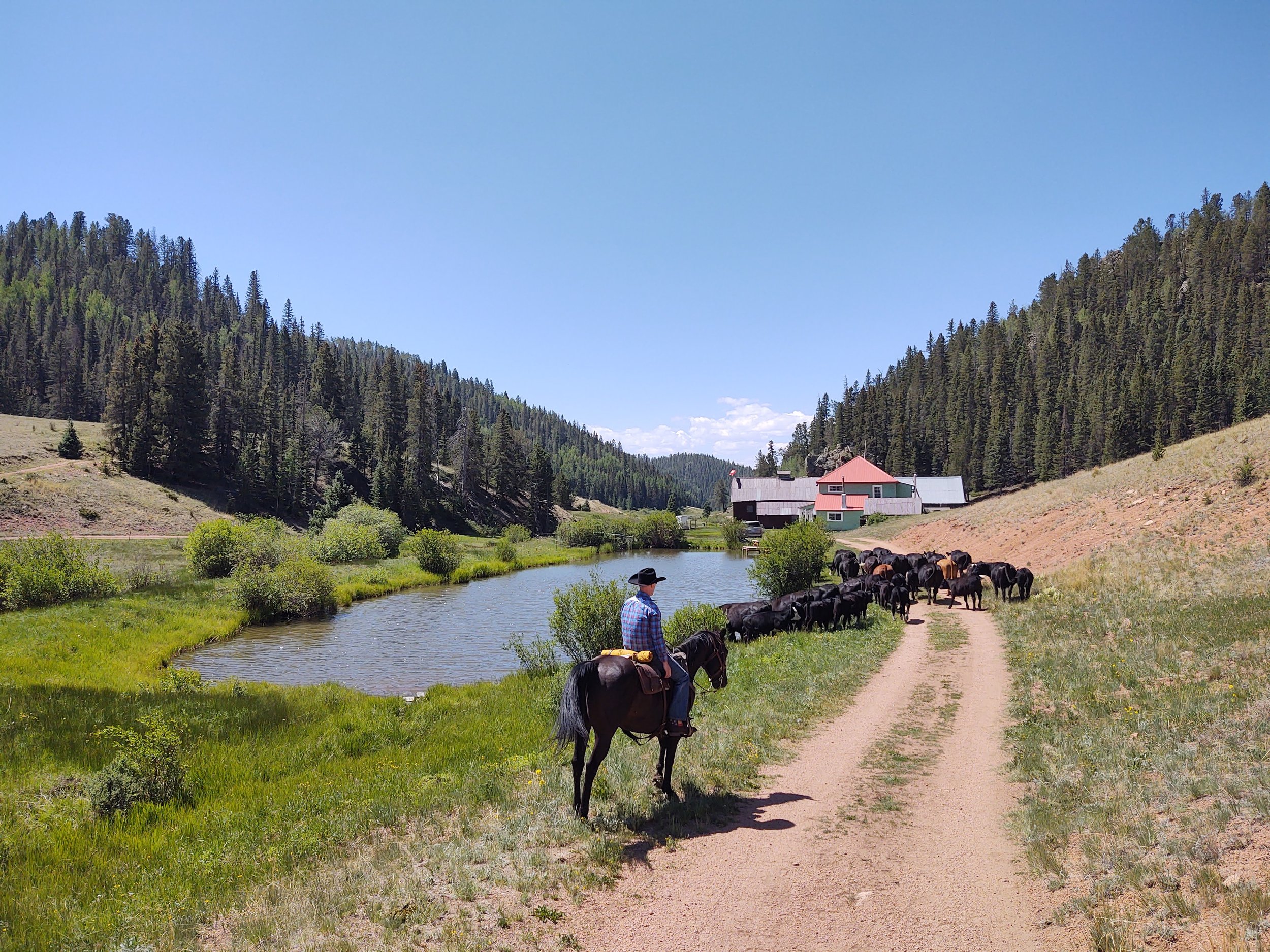
The Elk Glade lodge sits at 8,500 ft; the ranch ground runs 8,000 to 9,500. We see pre-rut bugling start with the first cold night of September — usually the first week — and peak vocal activity lands September 8–18 in a typical year. Peak estrus lockdown runs September 16–24, with bulls re-engaging vocally September 24–30 on the second-wave cycle.
Cold-year shifts everything five to seven days early. Warm-year shifts the peak vocal window later and shorter; some warm years the bulls are quiet by September 22 and don’t re-engage until a cold front rolls through in October.
For archery, our best week historically is September 10–18. For muzzleloader (Colorado’s limited-entry season typically runs Sep 12–20), the entire window is productive but the back half pairs with peak rut. Rifle 1 (mid-October) catches the post-rut recovery window with bulls feeding back into winter patterns — different tactic, often higher success rates.
FAQ
Specific questions, specific answers.
When does the elk rut peak in Colorado?
The Colorado elk rut typically peaks between September 15 and September 25, with September 18–22 the densest week of estrus activity in most years. Pre-rut bugling intensifies through the first two weeks of September; post-rut activity stretches into early October with a smaller second estrus wave for late-cycling cows.
Does elevation change rut timing in Colorado?
Yes, modestly. Higher-elevation units (above 9,000 ft) can run two to five days behind lower-elevation country because cooler temperatures hold cows from estrus slightly longer. South-facing aspects also lag north-facing aspects within the same unit. The peak window is the same; the bulls just stay vocal a few days longer up high.
When do bulls bugle the most?
Bulls bugle most heavily during pre-rut (roughly September 5–15) when herd bulls are gathering cows and satellite bulls are challenging. Peak-rut bugling actually decreases because the dominant bull is locked down with cows. The early-morning cold-air window (first 90 minutes after legal shooting light) is the densest bugling period across all stages.
What's the difference between pre-rut and peak rut for hunting?
Pre-rut (early September) favors calling — herd bulls aren't yet locked on cows and will come investigate aggressive bugle sequences. Peak rut (mid-to-late September) shifts the tactic to glassing cow groups and stalking the bull with them, because the dominant bull won't leave estrus cows to chase a call.
Does cold weather move the rut?
Cold weather doesn't move the biological estrus timing — that's photoperiod-driven and fixed — but it dramatically increases daylight movement and bugling at every stage. A cold front in mid-September turns peak-rut lockdown into the loudest bugle day of the year. A warm front in early September shuts it down.
What's the best week of September for archery elk in Colorado?
September 10–20 is the prime archery window in most Colorado units. The week of September 12–18 specifically pairs late pre-rut aggression (still callable) with the start of peak rut (high bull movement) — if cold weather lands in that window, it's typically the most productive seven days of the season.
On sources
Phenology framework synthesized from CPW elk biology documentation, multi-year field observation from the Elk Glade ranch staff, and corroborating published phenology research on Rocky Mountain elk (e.g., Geist 2002, Adaptive Behavioral Strategies). Year-specific peak dates vary; ranges here are typical based on multi-year averaging.