Brown trout
Wild, wary, and the dominant fish in many Colorado streams including East Beaver Creek. Browns hold tight to cover and reward a careful, drag-free drift. The big ones turn predatory and eat streamers.
Fly fishing · Trout + private water
Four trout, cold water, and the careful art of a drag-free drift. A primer on Colorado's trout — wild brown, eager brook, native cutthroat, acrobatic rainbow — how the seasons fish, and what three miles of private, fly-only water on East Beaver Creek delivers.
Why Colorado
Colorado is one of the great trout states — thousands of miles of cold mountain stream and tailwater holding wild and native fish, set in country worth fishing for its own sake. The fishing rewards the same things the hunting does: patience, a careful approach, and reading the water in front of you.
This is a primer on the fish and the seasons — and on what a private, low-pressure mountain creek fishes like, using the three miles of East Beaver Creek that run through the Elk Glade ranch as the example.
The four trout
Wild, wary, and the dominant fish in many Colorado streams including East Beaver Creek. Browns hold tight to cover and reward a careful, drag-free drift. The big ones turn predatory and eat streamers.
Not a true trout but a char — small, eager, and gorgeous, with worm-track backs and red-spotted flanks. Brookies fill the cold headwater stretches and take a dry fly readily. The most willing fish in the creek.
Colorado's native trout, named for the orange-red slash under the jaw. The Colorado River and greenback cutthroat are the state's own. A cutthroat on a high mountain stream is a fish with a sense of place.
Hard-fighting and acrobatic, common across Colorado's rivers and tailwaters. Less dominant in small cold headwaters but a staple of the state's larger fly water.
Private water
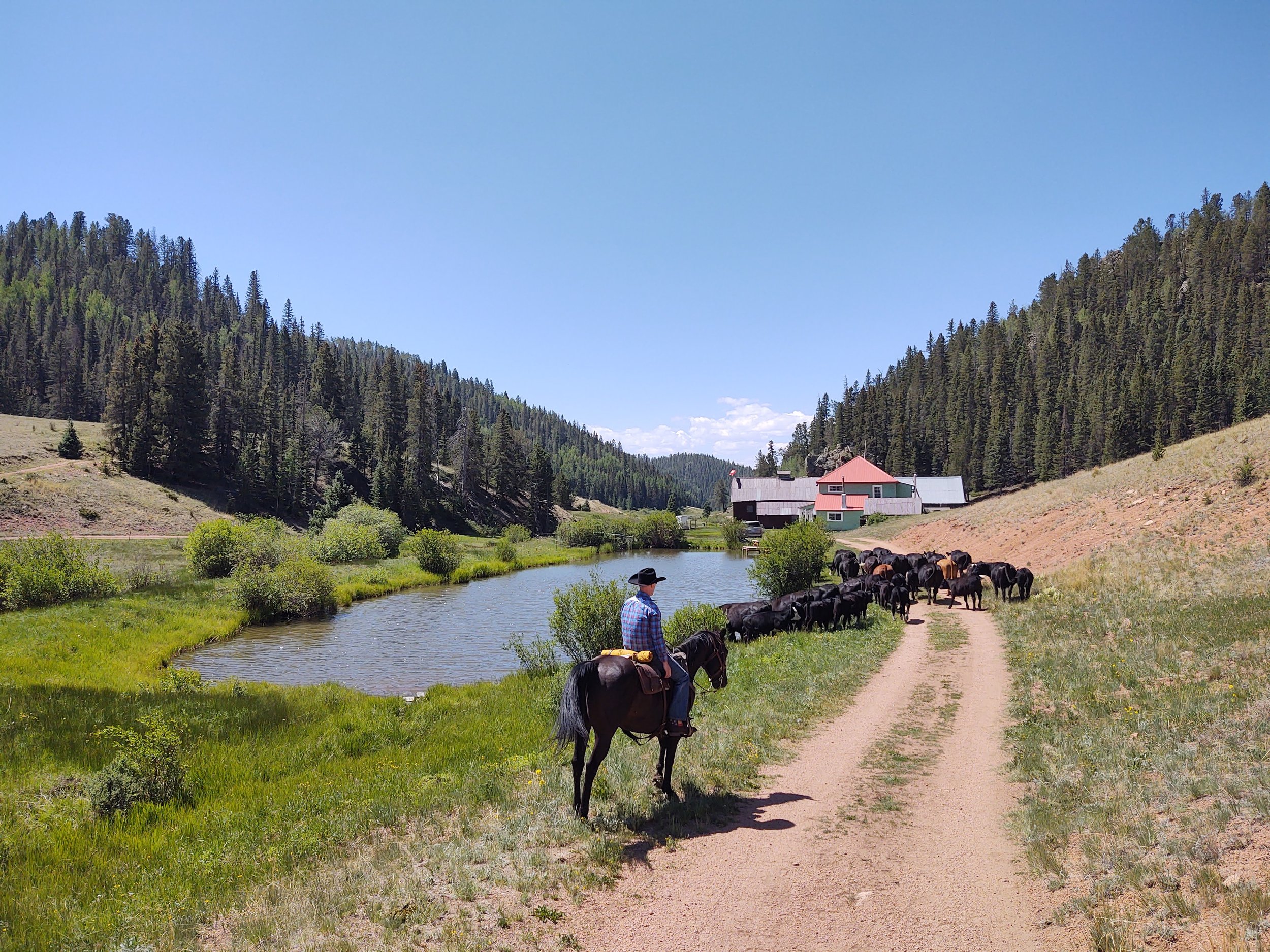
East Beaver Creek runs the length of the Elk Glade ranch — cold, spring-fed, eight to twenty feet wide, knee-to-thigh deep in the runs. Wild brown, brook, and cutthroat trout hold in it, and because it’s the only meaningful surface water for six miles in any direction, the fish concentrate.
It’s managed fly-only, single barbless, catch and release — which keeps the fishery wild and the fish willing. This is small-stream fishing at its purest: careful approaches, accurate short casts, drag-free drifts to fish that see almost no pressure. Guided or on your own.
Frequently asked
Colorado holds four main trout: brown trout (wild and wary, dominant in many streams), brook trout (technically a char, eager and beautiful in cold headwaters), rainbow trout (hard-fighting, common in larger water), and the native cutthroat trout (the state's own fish, with the orange-red throat slash). East Beaver Creek at Elk Glade holds wild browns, brookies, and cutthroat.
Colorado fly fishing is good from spring through fall, with each season fishing differently: spring runoff clears into excellent early-summer dry-fly fishing, mid-summer brings prolific hatches and high-country action, and fall browns get aggressive before winter. High-elevation freestone streams like East Beaver Creek fish best from late spring through early fall once the water warms and the hatches come on.
No — Colorado has abundant public water and a strong DIY tradition. But a guide (or private water) shortens the learning curve, puts you on fish faster, and matters most on technical or unfamiliar water. Private water like East Beaver Creek offers the added value of low pressure and undisturbed wild fish, guided or on your own.
Fly-only means only artificial flies (no bait or lures) are permitted, usually with single barbless hooks to minimize harm to the fish. Catch-and-release means fish are landed and returned to the water rather than kept. Together these rules protect a wild fishery so the same stream keeps producing healthy, hard-fighting trout year after year. East Beaver Creek at Elk Glade is managed fly-only, single barbless, catch and release.
East Beaver Creek runs three miles through the Elk Glade ranch — cold, spring-fed water eight to twenty feet wide, knee-to-thigh deep in the runs, holding wild brown, brook, and cutthroat trout. It's small-stream fishing: careful approaches, accurate short casts, and drag-free drifts to wild fish that see very little pressure. The only meaningful water for six miles in any direction, which concentrates the fish.