Is a cattle drive hard?
It's physical but very accessible — the main challenge is time in the saddle, not danger or athletic difficulty. On a guided cattle drive the horses do the hard work and the pace is a walk, so you don't need to be an athlete or an experienced rider. What gets people is the hours: a full day of riding uses muscles you don't normally use, so you'll be saddle-sore. Beyond that, mountain weather and altitude add a bit of demand. For most reasonably mobile adults, a cattle drive is challenging in a satisfying way, not a grueling one.
Do I need to be fit for a cattle drive?
You need to be reasonably mobile and comfortable spending hours on a horse, but you don't need to be especially fit. The horse carries you and the work is done at a walk, so it's endurance of a gentle kind — saddle time — rather than exertion. Some core and leg strength makes long days more comfortable, and a little riding beforehand helps your body adapt, but a guided cattle drive is designed to be doable for everyday people, not just athletes or cowboys.
What does a day on a cattle drive actually involve?
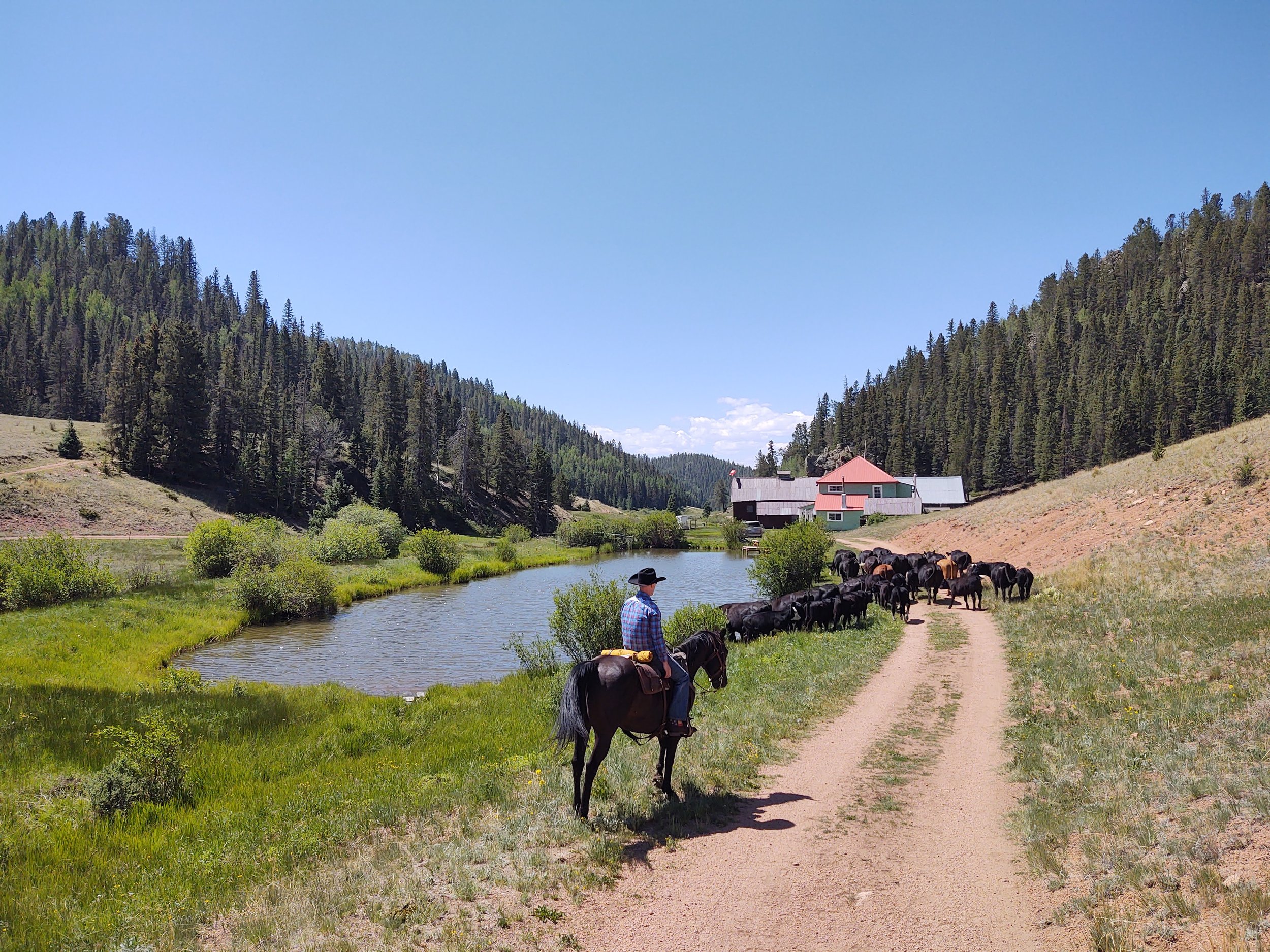
A day generally means several hours in the saddle moving cattle at a walk along established routes, with breaks to rest, water the horses, and eat. You ride in a group behind a guide, keeping the herd together and easing it in the right direction — real work, but unhurried. There's beautiful country, a lot of patience, and the genuine satisfaction of moving a herd. Multi-day drives add camp life; a day drive is a single long, rewarding outing.
Can a beginner go on a cattle drive?
Yes — guided cattle drives are built for beginners. The horses are calm, seasoned trail animals, the pace is a walk, and your guide teaches you what you need before you head out: how to sit, hold the reins, and help move the herd. Plenty of first-time riders ride a cattle drive every season. If you've never been on a horse, a little practice beforehand helps your confidence, but it isn't required — the outfit sets you up to succeed.
Will I be sore after a cattle drive?
Probably a little, and that's normal. A full day in the saddle works your inner thighs, hips, and core in ways everyday life doesn't, so most first-timers feel it the next day. It's the good kind of sore — the proof you did something real. You can soften it by riding a bit beforehand, wearing the right pants, and stretching. By the end of a multi-day drive your body adapts, and the soreness fades.