Skip to content

Wild turkey reference · Quick facts

25 wild turkey facts.

A bird that sees almost all the way around its own head, flies 55 miles an hour in a burst, gobbles across a mile of dawn timber, and came back from near-extinction. The most striking verified facts about the wild turkey — scannable and linked to the full references.

The bird

  • ›The wild turkey (Meleagris gallopavo) has five North American subspecies.
  • ›A tom (adult male) weighs 16–24 pounds; a hen 8–12.
  • ›A tom grows a 'beard' — a tuft of modified feathers on the chest.
  • ›Toms have spurs on their legs, used in fighting other males.
  • ›A tom's bare head flushes red, white, and blue during breeding season.
  • ›The fleshy head features have names: the snood, the wattle, the caruncles.

Sound + display

  • ›A tom's gobble can carry over a mile to attract hens and challenge rivals.
  • ›Turkeys make many sounds: gobble, yelp, cluck, purr, putt, cutt, and kee-kee.
  • ›The fanned tail and puffed feathers of a tom in 'strut' is a breeding display.
  • ›Hens, not toms, do most of the talking the rest of the year.

Senses + movement

  • ›Turkeys have excellent eyesight — sharp, in color, with a nearly 360° field of view.
  • ›Their sense of smell, by contrast, is poor — which is why hunters mind sight and sound, not wind.
  • ›A wild turkey can run about 25 mph and fly up to ~55 mph in short bursts.
  • ›Turkeys roost in trees at night, flying up at dusk and down at dawn.

Life + history

  • ›Hens nest on the ground and lay 10–14 eggs; poults (chicks) leave the nest within a day.
  • ›Poults eat mostly insects for protein in their first weeks.
  • ›Wild turkeys are omnivores — acorns, seeds, berries, green forage, and insects.
  • ›The wild turkey nearly vanished in the early 1900s, then recovered across the continent.
  • ›That recovery is one of North America's great wildlife conservation successes.
  • ›The story that Ben Franklin proposed the turkey as the national bird is a myth.

Frequently asked

Quick turkey questions.

What is the most surprising fact about wild turkeys?

Probably their eyesight: a wild turkey sees in sharp color with a nearly 360-degree field of view, which makes it extraordinarily hard to sneak up on — the reason turkey hunting is a game of concealment and calling rather than scent control. Their sense of smell, by contrast, is poor, so unlike deer and elk they don't bust hunters by the wind.
Can wild turkeys fly?

Yes — wild turkeys are strong short-distance flyers, reaching around 55 miles per hour in bursts, though they can't sustain it for long. They fly up into tall trees to roost every night and glide down at dawn. (The domestic turkey raised for meat is too heavy to fly; the wild bird is lean and very capable.)

Did Ben Franklin want the turkey as the national bird?

No — that's a popular myth. In a private letter, Franklin praised the turkey's character while criticizing the bald eagle, but he never formally proposed the turkey as a national symbol. The bald eagle was chosen. The wild turkey's real claim to fame is its conservation comeback from near-collapse in the early 20th century to robust populations today.

From the page to the field

Hunt spring Merriam's at Elk Glade.

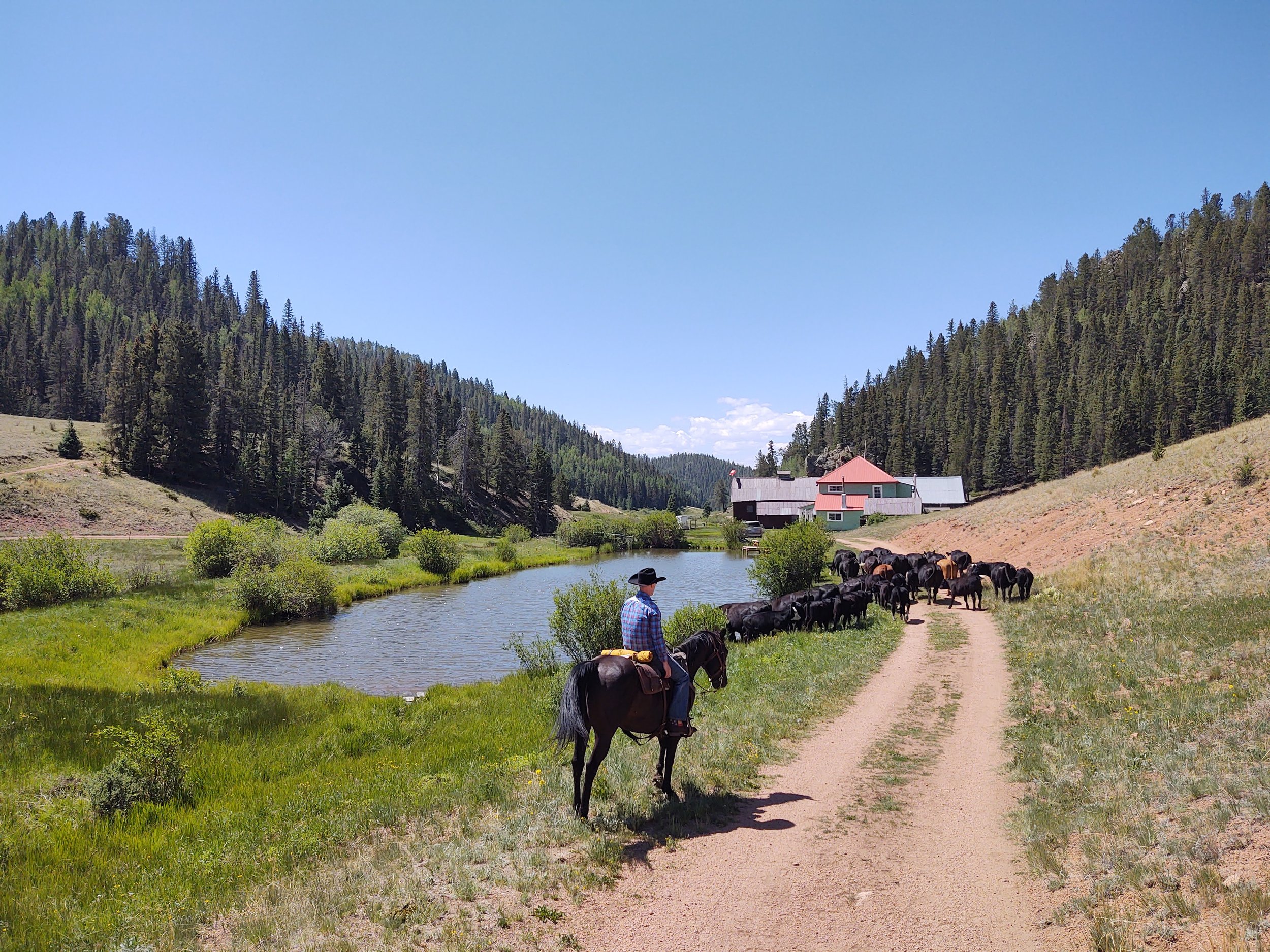
Elk Glade guides three-night spring Merriam's turkey hunts on the south slope of Pikes Peak, with the private-land early opener a week ahead of public seasons. Full strut, ranch country.